


Who is the author of Harry Potter is the definitive question marking the entry into one of the most transformative literary and pop-culture phenomena in human history. The visionary architect behind the magical world of Hogwarts, the boy who lived, and the epic struggle against the Dark Lord Voldemort is British novelist J.K. Rowling (born Joanne Rowling).
Far beyond a bestselling children’s series, Harry Potter has evolved into the multi-billion-dollar global franchise known as the “Wizarding World.” Behind this extraordinary commercial triumph lies an inspiring testament to perseverance against adversity, coupled with a masterclass in establishing, leveraging, and enforcing intellectual property (IP) assets.
The legal and analytical team at Tran & Tran Intellectual Property Co., Ltd. (Tran & Tran Law) has compiled this comprehensive study, providing cross-disciplinary insights ranging from the author’s formative journey to the complex copyright architecture of a global cultural brand.
1. Who Is the Author of Harry Potter? A Detailed Biography of J.K. Rowling
J.K. Rowling was born Joanne Rowling on July 31, 1965, in Yate, Gloucestershire, England. She is an internationally celebrated author, screenwriter, film producer, and philanthropist.
1.1. Decoding the Pen Names “J.K. Rowling” and “Robert Galbraith”
Readers frequently inquire about the structural origins of her pen names:
- The “K” Represents Kathleen: Kathleen was the name of her paternal grandmother. Ahead of the first volume’s publication in 1997, Bloomsbury publishing executives expressed concern that adolescent male demographics might hesitate to engage with a fantasy novel penned by a woman. They advised adopting a two-initial gender-neutral moniker alongside her surname.
- The Pseudonym Robert Galbraith: Following the completion of the wizarding series, Rowling transitioned into mature crime fiction with the Cormoran Strike private detective series. She assumed the male persona Robert Galbraith to ensure the work would be evaluated strictly on its literary merits without being overshadowed by the monumental fame of Harry Potter.
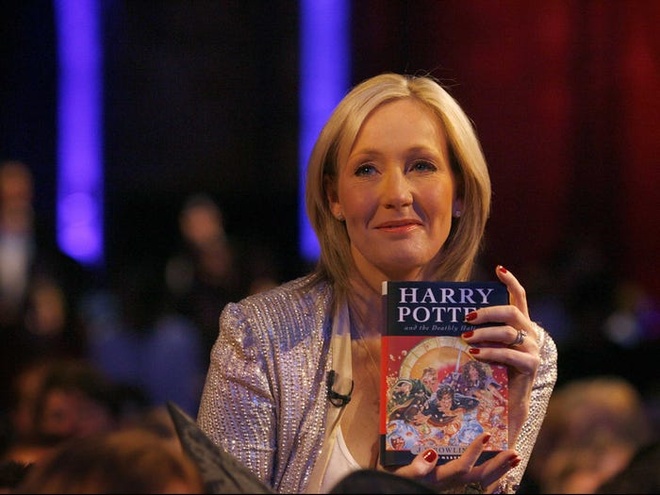
1.2. Early Formative Years and Passion for Classic Literature
Rowling grew up in a household centered around books. At the age of six, she composed her earliest manuscript, a tale about a rabbit afflicted with measles titled Rabbit. During her secondary schooling at Wyedean School, she was noted for her narrative talent, recounting complex stories to classmates during breaks. She later completed undergraduate studies in French and Classics at the University of Exeter—an academic foundation that directly influenced the Latin roots of spells and botanical nomenclature in her fictional world.
2. A Vision on a Delayed Train: Triumph Over Adversity
The inception of Harry Potter represents one of the most famous and inspiring origin stories in contemporary literature.
2.1. The Moment of Creative Insight (1990)
In the summer of 1990, aboard a commuter train from Manchester to London King’s Cross that was stalled for four hours, the vivid mental image of a scrawny, bespectacled, black-haired boy who was entirely unaware of his wizarding heritage came to Rowling. Lacking a functioning pen, she spent the transit hours conceptualizing the foundational plot, transcribing her notes onto paper upon returning to her flat.
2.2. Intersecting Crises: Grief, Domestic Turmoil, and Clinical Depression
In late 1990, her mother succumbed to multiple sclerosis—a loss that injected a profound sense of mourning and realism into Harry Potter’s orphan psychology. In 1992, Rowling relocated to Portugal to teach English, where she married and gave birth to her eldest daughter, Jessica.
The marriage fractured within thirteen months. By late 1993, Rowling returned to the United Kingdom, settling in Edinburgh, Scotland, as an unemployed single mother reliant on meager welfare assistance in an unheated apartment. She struggled with severe clinical depression during this era—a psychological torment she later transformed into the soul-draining specters known as Dementors.
2.3. The Edinburgh Cafés and Twelve Publishing Rejections
Rowling pushed her daughter’s pram through Edinburgh streets until the child fell asleep, taking refuge in establishments such as The Elephant House and Nicolson’s Café to handwrite and type her manuscript on an antiquated typewriter.
Upon completing Harry Potter and the Philosopher’s Stone, her literary agent pitched the manuscript to twelve separate publishing houses, all of which rejected the submission. In 1997, Nigel Newton, chief executive of Bloomsbury, approved publication after his eight-year-old daughter reviewed the initial chapter and demanded the rest of the text. The original run comprised a modest print of 500 hardcover copies, launching a global literary phenomenon.
3. Notable Works by Author J.K. Rowling
Rowling’s creative portfolio spans juvenile fantasy, moral parables, contemporary social fiction, and investigative crime literature:
| Series or Title | Publication Span | Genre Classification | Primary Distinction |
| Harry Potter (Complete 7 Volumes) | 1997 – 2007 | High Fantasy Fiction | Over 600 million copies sold; translated into 85+ languages |
| Fantastic Beasts and Where to Find Them | 2001 (Text) / 2016 (Screenplay) | Textbook / Screenplay | Expanded the cinematic Wizarding World into North American lore |
| Quidditch Through the Ages & The Tales of Beedle the Bard | 2001 & 2008 | Supplemental Lore | Royalties donated directly to charitable trusts supporting children |
| The Casual Vacancy | 2012 | Social Tragedy / Fiction | Author’s first standalone literary publication targeted at adults |
| Cormoran Strike Detective Series | 2013 – Present | Hardboiled / Procedural | Written under Robert Galbraith; adapted into a major BBC television series |
| The Ickabog & The Christmas Pig | 2020 – 2021 | Children’s Parables | Serialized freely for families during the global pandemic |
4. Unprecedented Milestones and Worldwide Cultural Impact
The Harry Potter canon disrupted modern entertainment economics and reinvigorated global reading habits:
- Unprecedented Publishing Metrics: Recognized as the highest-selling book series in history, circulating over 600 million physical units worldwide. The concluding entry, Harry Potter and the Deathly Hallows, recorded 11 million unit sales across the UK and US within its initial twenty-four hours of release.
- Cinematic Franchise Dominance: The eight-part cinematic adaptation produced by Warner Bros. generated nearly $8 billion in theatrical box office receipts, launching the careers of actors Daniel Radcliffe, Emma Watson, and Rupert Grint.
- Pervasive Cultural Legacy: Catalyzed an international fandom (Potterheads), formalized Muggle Quidditch into a collegiate athletic discipline, and laid the foundation for physical theme park installations at Universal Studios.
- Institutional Philanthropy: Rowling established Lumos, an international non-governmental organization working to eliminate institutional child placement, alongside the Volant Charitable Trust, which funds programs targeting poverty, domestic vulnerability, and multiple sclerosis research.
5. Legal and IP Insights: Intellectual Asset Management of the Harry Potter Empire
From the standpoint of dedicated legal practitioners at Trần & Trần, the financial scale of the Harry Potter franchise represents an exemplary study in intellectual asset lifecycle management. The brand’s enterprise value relies upon four interconnected legal pillars:
- Underlying Literary Copyright: Comprehensive international statutory protection for the text, character interactions, dramatic dialogue, and overarching manuscripts under the Berne Convention.
- Commercial Trademark Portfolios: Securing defensive, worldwide trademark registrations across multiple classes for character names (Harry Potter, Hermione Granger, Albus Dumbledore), regional settings (Hogwarts, Diagon Alley), and coined terminology (Quidditch, Muggle).
- Licensing and Franchising Operations: Contractual licensing governing theatrical motion pictures, interactive software developments, consumer retail merchandise, and architectural theme parks.
- Active Brand Defense and Anti-Piracy Enforcement: Strict monitoring of commercial fan-fiction, takedown of unauthorized digital distributions, and border enforcement seizures against counterfeit retail merchandise.
5.1. Distinguishing Copyright from Trademark Protection
J.K. Rowling and her agency, The Blair Partnership, secured copyright across all manuscripts. However, because copyright covers only specific textual expressions rather than overarching commercial titles, they also filed extensive trademark registrations covering:
- Core character identities: Harry Potter, Hermione Granger, Ron Weasley, Lord Voldemort.
- Institutional settings and heraldry: Hogwarts, Gryffindor, Slytherin, Platform 9 ¾.
- Fictional vocabulary: Muggle, Expelliarmus, Avada Kedavra.
Mastering the statutory boundary between trademarks and commercial brands allowed Rowling’s legal team to protect both the creative text and its commercial identifiers globally.
5.2. Strategic Licensing and Creative Control Architecture
In her studio agreements with Warner Bros., Rowling retained creative control over the film adaptations, requiring authentic British and Irish casting to preserve the narrative integrity. Crucially, she preserved rights to merchandising royalties, interactive digital distribution, and theme park gross operating revenues.
When licensed manufacturers produce complex branded merchandise such as collector wands, house apparel, and mechanical props, they undergo rigorous industrial design and trade dress reviews comparable to standards in industrial manufacturing and product design fabrication to meet the licensor’s technical criteria.
5.3. Managing Derivative Works and Counterfeit Enforcement
Rowling and Warner Bros. have consistently enforced their IP rights against commercial infringement. A key legal precedent was set in the 2007 litigation Warner Bros. Entertainment Inc. v. RDR Books regarding The Harry Potter Lexicon:
- The federal court ruled that while non-commercial, transformative reference scholarship is permissible under fair use doctrines,
- Commercial publication that reproduces substantial original descriptive prose without a valid license constitutes copyright infringement.
To safeguard valuable creative works against unauthorized commercial exploitation, rights holders must perform regular online brand and copyright clearances to identify and address infringing listings across digital platforms.
6. The Imperative of Early Intellectual Property Registration
The commercial trajectory of J.K. Rowling illustrates a key principle: Creative concepts attain commercial value only when protected by enforceable legal titles.
Creators and enterprises that neglect formal IP filings face serious risks:
- Risk of Abandonment and Usurpation: In first-to-file jurisdictions, unfiled character names and brand elements can be preemptively registered by bad-faith third parties, cutting off future commercialization.
- Enforcement Hurdles in Digital Marketplaces: When unauthorized reproductions appear across e-commerce networks or social video channels, the absence of official copyright or trademark certificates hinders prompt administrative enforcement.
Structuring formal registration documents in accordance with official technical guidelines, such as those used for a standard trademark application declaration, is essential to establishing secure legal title for creative assets.
7. Intellectual Property Advisory Practice at Tran & Tran Law
Established in September 2013, Tran & Tran Intellectual Property Co., Ltd. (Tran & Tran Law / Tran & Tran IP) is an officially licensed Industrial Property Representation Organization recognized by the Intellectual Property Office of Vietnam.
Serving publishers, entertainment networks, authors, and corporate brand holders, our firm provides comprehensive intellectual property services designed to secure and commercialize creative portfolios:
- Copyright Registration and Verification: Securing official certificates for novels, scripts, cinematic storyboards, applied artistic works, and digital assets.
- Trademark Prosecution and Defensive Clearance: Managing clearance searches and cross-border filings locally and internationally via the Madrid System.
- Anti-Piracy Enforcement and Litigation: Drafting Cease & Desist demands, procuring certified electronic bailiff reports, and executing takedowns with platform legal teams, Market Surveillance units, and Economic Police.
- Licensing and Franchise Agreement Drafting: Negotiating entertainment rights, digital adaptations, merchandise licensing, and cross-border distribution terms.
Additionally, for enterprises importing high-end literature collections, published media, or promotional products, partnering with licensed logistics providers like TCL Freight ensures clear customs documentation, tax compliance, and secure transportation of physical materials.
To explore our practice areas, visit our professional IP services portal or review our firm credentials at trantranlaw.com.
8. Conclusion
J.K. Rowling’s career highlights both creative perseverance and commercial acumen. Her development of Harry Potter underscores the transformative power of original storytelling supported by a robust intellectual property strategy.
Whether you are an independent novelist, a sequential artist, or an expanding media enterprise, early intellectual property protection provides the necessary legal foundation to turn creative concepts into lasting commercial assets.
Frequently Asked Questions (FAQ)
- What year was the author of Harry Potter born?
Author J.K. Rowling was born on July 31, 1965, in Yate, Gloucestershire, England.
- What is the author’s legal name?
Her full legal name is Joanne Rowling. She selected the initialed pen name J.K. Rowling for children’s fantasy and uses Robert Galbraith for detective fiction.
- What is the approximate commercial valuation of J.K. Rowling’s estate?
J.K. Rowling became the first author to reach billionaire status purely through creative publishing. While she has contributed substantial sums to global charitable trusts, her net worth remains around $1 billion, derived from ongoing print royalties, film revenue, and worldwide merchandise licensing.
- What is the typical timeline for literary copyright registration in Vietnam?
Pursuant to statutory administrative regulations with the Copyright Office of Vietnam, copyright certificates for literary works are typically granted within 15 to 20 business days following the submission of a compliant dossier.
Corporate Representation and Contact Information
- Firm: Tran & Tran Intellectual Property Co., Ltd. (Tran & Tran Law / Tran & Tran IP)
- Head Office: Room 802, Talico Building, 22 Ho Giam Street, Van Mieu – Quoc Tu Giam Ward, Dong Da District, Hanoi, Vietnam
- Hotline: +84 (024) 3732 7466
- Email: [email protected]
- Portals: trantran.vn | trantranlaw.com
- Hours: 8:00 AM – 18:00 PM, Monday through Friday
