Artistic work copyright protection serves as the primary legal defense empowering painters, sculptors, photographers, visual illustrators, and commercial design studios to secure the full economic and moral value of their intellectual creations. Amid a thriving creative economy and the rapid expansion of digital platforms, original single-edition artworks and commercial applied graphic assets face continuous risks of illicit duplication, physical counterfeiting, unauthorized commercial merchandising, and digital copyright infringement.
An original oil painting, a monumental architectural sculpture, or a proprietary graphic pattern for commercial packaging requires substantial investments of time, creative vision, and technical mastery. Securing a formal Certificate of Registered Copyright establishes unassailable legal standing during disputes, enhances professional credibility when participating in international exhibitions and high-end art auctions, and facilitates secure licensing transactions.
The comprehensive operational guide below by Tran & Tran Intellectual Property Co., Ltd. outlines the complete legal framework and procedural roadmap for registering and defending artistic assets.
1. Statutory Mechanism and Scope of Protection for Works of Art
Under statutory intellectual property frameworks and international treaties such as the Berne Convention, works of art fall under the scope of copyright protection across two primary classifications: works of visual art (pure fine arts) and works of applied art.
1.1. Works of Visual Art
Encompasses creations expressed through lines, colors, three-dimensional forms, and spatial arrangements intended purely for aesthetic appreciation:
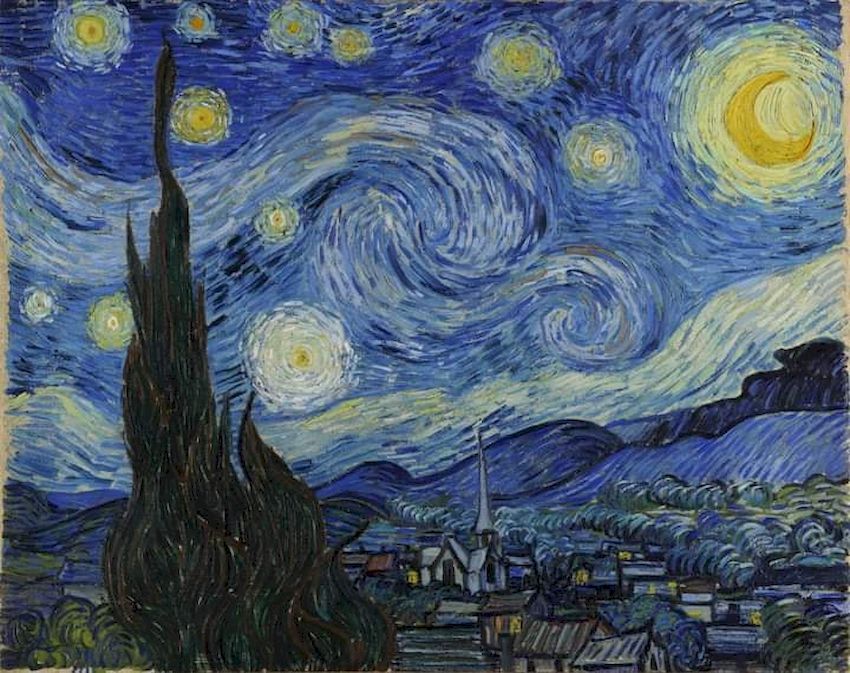
- Paintings and graphic illustrations: Lacquer, oil on canvas, silk paintings, woodblock prints, watercolors, acrylics, and original digital illustration vectors.
- Sculptural works: Fine art sculptures, monuments, reliefs, and landscape installations rendered in stone, bronze, wood, or modern synthetic composite media.
- Installation art: Three-dimensional contemporary spatial configurations and mixed-media site-specific works.
1.2. Works of Applied Art
Refers to creations expressed through lines, colors, dimensions, and configurations that combine aesthetic originality with practical utility, whether crafted by hand or manufactured industrially:
- Decorative pattern layouts applied to textiles, luxury fabrics, fine ceramics, jewelry, and commercial packaging.
- Mascot character sketches, 2D/3D animated avatars, and custom artistic typography.
- Vector logotypes and figurative design marks developed for brand identity systems.
When applied art designs transition into high-volume die-casting, injection molding, or mass fabrication within industrial manufacturing and product design fabrication, rights holders can combine applied art copyright registration with Industrial Design patents to establish comprehensive dual-track legal exclusivity.
2. Fundamental Copyright Principles and Terms of Protection
The statutory regime safeguarding artistic works operates on several core principles:
- Doctrine of automatic fixation (Formality-free vesting). Copyright protection arises automatically once a work is fixed in a tangible medium of expression (e.g., painted on canvas, sculpted in stone, or saved into high-resolution digital master files), without requiring mandatory registration to exist. Nonetheless, obtaining an official Certificate of Registered Copyright serves as prima facie evidence before judicial courts and administrative enforcement bodies, relieving the rights holder of the burden of proving initial authorship during infringement litigation.
- Idea-expression dichotomy. Copyright law strictly protects the specific, original aesthetic expression embodied in lines, shapes, and color balances—not general artistic painting styles, schools of art, abstract concepts, or theoretical techniques.
- Statutory terms of protection.
- Moral rights (the right to name the work, claim paternity, and preserve work integrity): Protected indefinitely in perpetuity (with the exception of the right of first publication, which aligns with economic exploitation terms).
- Economic rights: For works of applied art, the term of protection spans 75 years from the date of lawful initial publication; if unpublished within 25 years from fixation, the duration extends to 100 years from creation. For pure visual fine arts (easel paintings, fine sculptures), economic rights endure for the author’s lifetime plus 50 years following the calendar year of death.
Alongside copyright protections, individual artists, design collectives, and commercial art galleries should evaluate the statutory boundary between trademarks and commercial brands to secure multi-class trademark registrations for gallery names, design studio monikers, and artistic signature marks across regional art markets.

Statutory Allocation of Rights: Creative Artists vs. Commercial Owners
| Subject Category | Moral Rights Retained | Economic Rights Held | Commercial Disposal Scope |
| Creative Artists & Illustrators | Attribution, paternity, and integrity rights | Retains statutory royalties per commission contracts | Retains the absolute right to enjoin defamatory alterations |
| Commissioning Entities & Studios | Right of publication (as contractually agreed) | Reproduction, distribution, exhibition, and licensing | Holds full commercial authority to license and monetize |
| Purchasers of Original Physical Works | No moral rights in the underlying work | Owns the physical chattel only, not reproduction rights | Authorized to exhibit the physical piece; cannot print copies |
3. Required Dossier for Registering Works of Art
To facilitate uninterrupted approval through the competent national Copyright Office, applicants must compile a standardized documentation package:
- Official Copyright Registration Application Form. Completed via the standardized administrative template designated for fine art and applied art creations.
- Two Master Archival Copies of the Artistic Work.
- For paintings and 2D illustrations: Two crisp, high-resolution color prints on standard A4 photographic paper, clearly displaying the artist’s signature.
- For three-dimensional sculptures: Two sets of multi-perspective photographs (front, rear, top-down, and side profiles) documenting volume, spatial scale, and structural contours.
- For digital art and graphics: Two optical discs (CD/DVD) or high-capacity flash drives containing native resolution files (TIFF, PNG, AI, or PSD) alongside two printed descriptive sheets.
- Written Artwork Specification and Narrative Description. A concise written statement detailing the creative thesis, aesthetic composition, line structure, color palette, and cultural or stylistic significance.
- Documentation Establishing Right to File.
- Work-for-hire assignment agreements if created by an employee in the regular course of business.
- Commissioned service contracts or copyright transfer deeds with explicit assignment clauses if created by external freelance artists.
- Estate probate decrees or inheritance certificates if the applicant is the legal heir of a deceased artist.
- Author’s Affidavit of Originality. A legally binding declaration confirming the work is an original intellectual creation and does not infringe third-party copyrights.
- Joint Ownership Agreement. Mandatory where multiple artists co-create a piece or multiple investors jointly co-finance the artistic project.
- Legal Identity Verification Documents. Certified enterprise registration licenses for corporate owners alongside valid government-issued identification for all contributing artists.
- Power of Attorney. Executed on the authorized statutory form appointing a licensed Industrial Property Representation Organization to handle all prosecution proceedings.

4. Four-Step Procedural Roadmap for Artistic Copyright Protection
Step 1. Originality Audit and Clearance Search
Before proceeding with an official filing, artists and commercial enterprises should conduct preliminary checks and carry out online brand and copyright clearances to ensure the artistic design does not inadvertently copy, dilute, or collide with pre-existing registered designs and visual marks.
Step 2. Dossier Standardization and File Packaging
Capture high-definition photographs under neutral studio lighting, prepare museum-grade color prints, finalize the artwork’s design specification, and audit assignment clauses within service contracts to ensure an unbroken chain of title.
Step 3. Official Submission and Statutory Fee Payment
Submit the finalized documentation directly to the national Copyright Office filing counters or through the digital filing systems of the [suspicious link removed], settling official administrative examination fees.
Step 4. Substantive Examination and Certificate Issuance
The examining authority reviews the formal accuracy of documentation, creative originality, and applicant standing within 15 working days. Upon statutory satisfaction, an official Certificate of Registered Copyright for the artistic work is issued to the rights holder.
Following rigorous technical standards—analogous to preparing an official trademark application declaration—minimizes procedural office actions and expedites official approval.

5. Countering Infringement and Securing High-Value Logistics
In the digital era, artistic assets are vulnerable to unauthorized commercial exploitation:
- Unlicensed print-on-demand merchandising. Unauthorized actors scraping high-resolution portfolio images from art communities and social networks to mass-produce canvas prints, apparel lines, and phone cases on e-commerce marketplaces.
- Manual art forgery and commercial replica workshops. Commercial painting workshops reproducing unauthorized oil painting copies of limited-edition pieces to sell as low-cost decorative decor.
- Visual plagiarism and motif theft. Cropping or slightly modifying subtle elements while keeping overall compositional and stylistic arrangements intact for unauthorized corporate logos or merchandise.
- Administrative and judicial enforcement. Preserving certified electronic bailiff records, issuing formal Cease and Desist notices, petitioning market surveillance authorities for administrative raids and counterfeit destruction, or initiating civil litigation for monetary damages.
- Cross-border fine art logistics and physical security. When transporting original paintings, sculptures, or curated museum pieces overseas for international art biennials or auction house viewings, artists and galleries should partner with specialized international freight forwarders like TCL Freight. This guarantees temperature-controlled, shock-absorbent art packaging, professional customs bonded handling, and safeguards valuable originals against damage, port seizures, or transit tampering.
6. Fine Art and Applied Art Copyright Practice at Tran & Tran Law
Established in 2013, Tran & Tran Intellectual Property Co., Ltd. (Tran & Tran Law / Tran & Tran IP) is an officially licensed Industrial Property Representation Organization. Supporting painters, sculptors, graphic artists, digital studios, and commercial enterprises, we deliver comprehensive intellectual property services across creative disciplines:
- Classification and Strategy Consulting. Assessing the originality of visual and applied arts, and designing optimal dual-track protection combining copyright certificates with industrial design patents.
- Fast-Track Administrative Prosecution. Preparing professional artwork documentation dossiers, prosecuting filings through official channels, and delivering registered certificates directly to clients.
- Licensing Agreements and Dispute Resolution. Drafting artwork licensing deeds, gallery distribution contracts, resolving digital copyright infringements, and representing clients in judicial proceedings.
Explore our full range of intellectual property solutions via our professional IP services portal.
Direct Consultation and Representative Office
- Entity: Tran & Tran Intellectual Property Co., Ltd. (Tran & Tran Law / Tran & Tran IP)
- Head Office: Room 802, Talico Building, 22 Ho Giam Street, Van Mieu – Quoc Tu Giam Ward, Dong Da District, Hanoi
- Official Websites: trantranlaw.com | trantran.vn
- Practice Areas: Industrial Property Representation, Artistic and Applied Art Copyrights, Trademarks, Patents, Industrial Designs, Licensing, and Intellectual Property Dispute Resolution.