Trademark monitoring services help businesses detect trademark risks early, monitor similar marks, identify online infringement, and protect brand value after filing or registration. A trademark may be registered, but that does not mean the market is automatically free from confusingly similar applications, unauthorized sellers, fake listings, counterfeit products, or improper brand use.
For many businesses, trademark protection becomes more important after the brand starts gaining visibility. Competitors may file similar marks. Online sellers may copy product names or images. Distributors may use the brand outside approved limits. Counterfeit products may appear on marketplaces. If these risks are not detected in time, enforcement can become more difficult and more expensive.
This guide by Tran & Tran explains what trademark monitoring services include, why monitoring matters, how trademark watch works, how online infringement can be detected, and when businesses should use professional monitoring support.
What are trademark monitoring services?
Trademark monitoring services are professional services that track trademark-related risks after a business uses, files, or registers a mark. The purpose is to detect potentially conflicting marks, unauthorized brand use, online infringement, counterfeit activity, and other risks that may affect brand value.
Monitoring may cover official trademark databases, newly published trademark applications, similar marks, related goods and services, marketplace listings, domain names, websites, social media accounts, app stores, and online advertisements.
These services are different from a one-time trademark search. A search is usually conducted before filing or launching a brand. Monitoring is ongoing. It helps businesses see what happens after the brand enters the market and after other parties begin filing or using similar signs.
For businesses still building their intellectual property foundation, understanding what a trademark is and why trademark registration matters is an important first step before setting up trademark monitoring services.
Why trademark monitoring services matter
Trademark monitoring services matter because trademark registration alone does not automatically stop others from filing or using similar marks.
A trademark office may examine applications based on its own rules, but brand owners still need to monitor risks actively. In some jurisdictions, if a business misses an opposition deadline, it may lose an important opportunity to challenge a similar mark before it becomes registered.
Early detection gives businesses more options. If a conflicting trademark application is found quickly, the business may consider filing an opposition, sending a warning letter, negotiating with the applicant, collecting evidence, or monitoring the application until the right time to act.
Monitoring also helps businesses detect online problems before they spread. A fake listing, unauthorized seller, copied product image, or misleading social media account can cause customer confusion quickly. When the issue is identified early, the business can prepare evidence and choose a proportionate response.
For this reason, trademark monitoring services should be treated as part of brand risk management, not only as an administrative task.
Trademark monitoring vs trademark search
Trademark search and trademark monitoring serve different purposes.
A trademark search is usually performed before a business files a trademark application or launches a new brand. It helps identify earlier marks that may create refusal, opposition, or infringement risks. A proper search may review identical marks, similar marks, related goods and services, translations, transliterations, and possible marketplace conflicts.
Trademark monitoring happens after the brand is in use, after an application is filed, or after registration is obtained. It tracks new risks over time. These risks may include newly filed similar marks, new marketplace listings, new domain names, new social media accounts, or new sellers using the brand without permission.
Both activities are important. A search reduces risk before filing, while monitoring helps protect the brand after it becomes visible in the market.
Businesses that need support before filing can review trademark registration services to understand how search, filing, and monitoring can work together in a complete trademark strategy.
What do trademark monitoring services include?
The scope of trademark monitoring services depends on the business, trademark portfolio, countries, platforms, and risk level.
A typical monitoring program may include watching new trademark applications, identifying identical or similar marks, reviewing related goods and services, checking phonetic similarity, reviewing visual similarity, monitoring translations and transliterations, tracking related classes, and assessing likelihood of confusion.
For digital businesses, monitoring may also include marketplace listings, product titles, seller accounts, product images, fake websites, domain names, social media pages, app stores, and online advertisements.
A monitoring service should not only deliver raw results. It should help the business understand which findings are high risk, which are lower priority, what deadlines may apply, what evidence should be saved, and what response may be appropriate.
WIPO’s Global Brand Database provides access to international trademarks under the Madrid System and trademarks from participating national and regional offices, and allows searches by keywords, names, numbers, goods and services, image similarity, or a combination of criteria.
Trademark watch for new trademark applications
Trademark watch is one of the most important parts of trademark monitoring services.
Trademark watch focuses on detecting new trademark applications that may conflict with a business’s existing marks. These applications may be identical, visually similar, phonetically similar, conceptually similar, translated, transliterated, or filed in related classes.
The purpose is not to object to every similar mark. The purpose is to identify which applications may create real commercial or legal risk. A watch report should therefore be reviewed by someone who understands trademark law, brand strategy, goods and services classification, and likelihood of confusion.
Important factors may include the similarity between the marks, similarity between the goods or services, target customers, sales channels, country, filing date, applicant identity, prior relationship with the business, and the applicable opposition deadline.
When a serious risk is found, the business may consider opposition, negotiation, warning letters, coexistence discussions, or further monitoring depending on the facts.
Online trademark monitoring
Online infringement is now a major reason businesses use trademark monitoring services.
A brand may be misused on marketplaces, websites, domain names, social media platforms, app stores, online ads, livestream channels, and reseller pages. Infringers may use exact brand names, misspellings, similar logos, copied product images, translated names, product names, hashtags, or misleading descriptions.
Online monitoring should track both the trademark and the way customers encounter the brand. This includes product listing titles, seller account names, product photos, store descriptions, advertising copy, domain names, social media handles, and app names.
When a suspicious result is found, the business should preserve evidence before taking action. Screenshots, URLs, dates, seller identities, prices, product descriptions, shipping details, and customer reviews may all be useful.
Businesses facing digital infringement can also review online brand protection to understand how monitoring, takedown, seller control, and enforcement work together.
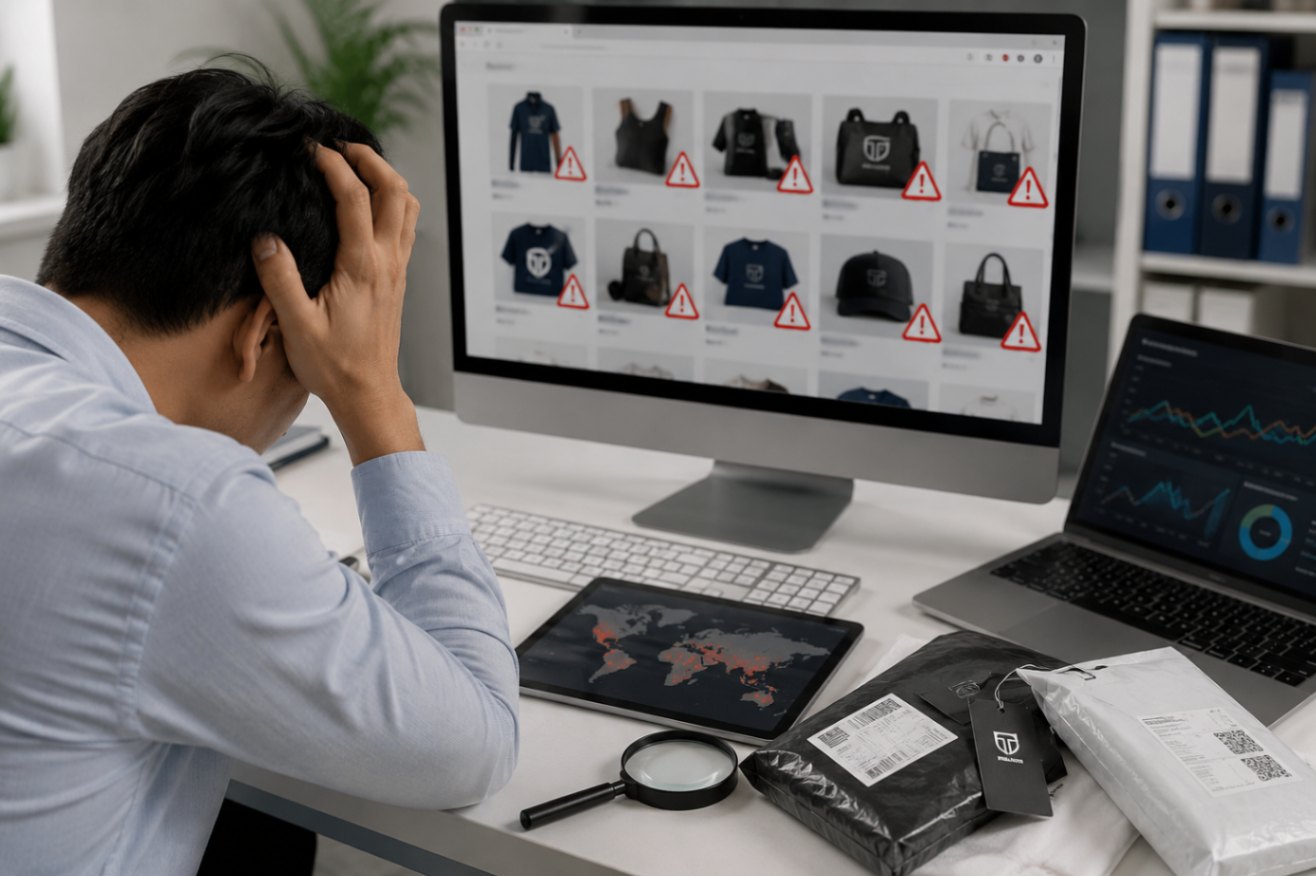
Trademark monitoring for counterfeit and unauthorized sellers
Trademark monitoring services can help detect counterfeit goods and unauthorized seller activity.
Counterfeit products may use the brand name, logo, packaging, product images, or product descriptions to make fake goods look genuine. Unauthorized sellers may sell genuine goods through unapproved channels, use the trademark in a misleading way, or operate outside agreed distribution limits.
Monitoring can help businesses identify suspicious listings, compare product presentation, detect repeated seller accounts, track platform patterns, and prepare takedown or enforcement actions.
Not every seller issue is the same. Some cases may involve clear counterfeit goods. Others may involve gray market goods, contractual violations, misleading advertising, or improper use of product images. The response should be based on the legal rights, available evidence, platform rules, and commercial objectives.
A strong monitoring program should help businesses separate urgent infringement from lower-risk results, so enforcement resources are used efficiently.
International trademark monitoring
International trademark monitoring is important for businesses that export, sell online, appoint distributors, manufacture abroad, or manage trademark portfolios in multiple countries.
Trademark rights are territorial. A mark registered in one country does not automatically protect the brand in another country. This means a business may need to monitor priority markets, manufacturing countries, distributor territories, online sales destinations, and jurisdictions with higher risks of bad-faith filing or counterfeiting.
International monitoring may involve national trademark databases, regional systems, Madrid System records, marketplace platforms, domain names, and local online channels.
WIPO states that Madrid Monitor allows users to search and monitor international trademark applications and registrations, while WIPO’s “Find and monitor” tools also provide access to the WIPO Gazette of International Marks.
For businesses managing several countries, international trademark portfolio management can help connect filing, monitoring, renewals, ownership updates, and enforcement into one coordinated system.
When should a business use trademark monitoring services?
A business should consider using trademark monitoring services after filing a trademark application, after receiving registration, before entering a new market, after launching online sales, or when the brand starts gaining commercial visibility.
Monitoring is also useful when the business appoints distributors, licenses the brand, expands through franchise models, sells through marketplaces, or receives customer reports about fake products or suspicious sellers.
Startups may use monitoring to protect brand value before fundraising or product expansion. Exporters may use monitoring to detect risks in destination markets. E-commerce businesses may use monitoring to identify fake listings, repeated sellers, and copied product content.
A business with a growing trademark portfolio should not wait until a dispute arises. Monitoring helps detect risks while the business still has more options to respond.
How trademark monitoring supports enforcement
Trademark monitoring services support enforcement by giving businesses early information.
When a risk is detected, the business can assess whether the issue is a trademark conflict, copyright issue, counterfeit case, domain name problem, distributor misuse, or marketplace violation.
Monitoring also helps preserve evidence. In online cases, infringing listings and websites may disappear quickly. If evidence is not saved early, it may be harder to prove what happened later.
The right response depends on the facts. A similar trademark application may require opposition or cancellation. A fake listing may require marketplace takedown. A repeated seller may require investigation or warning letters. A distributor issue may require contract enforcement. A cross-border matter may require local counsel coordination.
Businesses facing infringement can review brand protection services to understand how monitoring connects with enforcement, anti-counterfeiting, and long-term brand protection.
What should a trademark monitoring report include?
A useful trademark monitoring report should be clear, practical, and action-oriented.
The report should identify the monitored trademark, country or platform scope, databases reviewed, monitoring period, search criteria, and detected results. For trademark watch, it should include the similar mark, applicant name, application number, filing date, publication date if available, goods and services, classes, status, and relevant deadlines.
The report should also assess similarity. This may include visual similarity, phonetic similarity, conceptual similarity, translation, transliteration, related classes, and likelihood of customer confusion.
For online monitoring, the report should include URLs, seller names, screenshots, platform names, product titles, product images, prices, account information, and signs of trademark or copyright misuse.
Most importantly, the report should identify risk level and recommended action. A business needs to know whether to monitor, send a warning, file an opposition, submit a takedown request, collect more evidence, contact a distributor, or escalate the matter to legal enforcement.
Common mistakes in trademark monitoring
One common mistake is monitoring only the exact trademark. Infringers and conflicting applicants may use misspellings, abbreviations, translations, transliterations, similar logos, or product name variations.
Another mistake is ignoring related classes. A mark may create commercial confusion even when the goods or services are not identical, especially if the products are complementary, sold through similar channels, or target the same customers.
A third mistake is monitoring official databases only. Online infringement may appear on marketplaces, websites, social media, app stores, and domain names before it becomes visible in trademark registers.
A fourth mistake is missing opposition deadlines. If a business detects a risky application too late, it may lose an efficient opportunity to challenge the mark early.
A fifth mistake is collecting weak evidence. Screenshots without URLs, dates, seller details, or product context may be less useful for enforcement.
Another common mistake is failing to update the monitoring scope. As the business enters new markets, launches new products, changes logos, or appoints distributors, the monitoring program should also be updated.

How much do trademark monitoring services cost?
The cost of trademark monitoring services depends on the scope of monitoring and analysis.
Key cost factors include the number of trademarks, number of countries, number of classes, number of platforms, frequency of reports, depth of legal analysis, online monitoring scope, marketplace coverage, domain monitoring, social media monitoring, and whether enforcement support is included.
A business monitoring one core mark in one country will have a different budget from a company monitoring multiple trademarks across several jurisdictions and online platforms.
Businesses should avoid assuming a fixed cost before the portfolio and risk profile are reviewed. A proper estimate should separate database monitoring, online monitoring, report preparation, legal review, evidence preservation, takedown support, opposition work, local counsel coordination, and urgent enforcement actions.
The most cost-effective approach is usually to monitor the highest-value marks, priority countries, and highest-risk platforms first.
How to choose trademark monitoring services
Choosing trademark monitoring services should depend on the quality of detection, analysis, reporting, and enforcement support.
A suitable provider should understand trademark law, similarity analysis, goods and services classification, online infringement, marketplace enforcement, evidence collection, and international coordination.
The service should monitor more than exact matches. It should consider similar marks, phonetic variations, visual similarity, translations, transliterations, related classes, and online misuse.
Reporting should be practical. A long list of unfiltered results is not enough. Businesses need risk assessment, priority ranking, deadlines, evidence, and recommended next steps.
For companies with online or international operations, it is useful to work with a team that can connect monitoring with filing strategy, portfolio management, takedown, opposition, anti-counterfeiting, and local counsel coordination.
Trademark monitoring services at Tran & Tran
Tran & Tran supports businesses in protecting and managing intellectual property rights in Vietnam and other Asian jurisdictions. The firm’s work covers trademarks, patents, industrial designs, copyright, trade secrets, licensing, enforcement, and IP portfolio strategy.
For trademark monitoring services, Tran & Tran can assist with trademark watch, monitoring of similar applications, online infringement review, marketplace monitoring, seller risk assessment, counterfeit risk detection, evidence preparation, risk reporting, opposition strategy, takedown support, warning letters, distributor misuse review, and local counsel coordination.
For businesses entering Vietnam or Southeast Asia, Tran & Tran can help identify trademark risks, monitor unauthorized use, protect registered rights, and connect monitoring results with practical enforcement actions.
A strong monitoring program should not only detect risks. It should help the business decide what matters, what can be monitored, what requires action, and how to protect brand value efficiently.
Conclusion
Trademark monitoring services help businesses protect trademarks after filing, after registration, and after market launch. Registration is important, but businesses still need to watch for similar applications, online infringement, unauthorized sellers, counterfeit products, domain abuse, and improper brand use.
A practical monitoring strategy should combine trademark watch, online monitoring, marketplace review, evidence collection, risk assessment, deadline tracking, and enforcement planning.
For growing brands, early detection is often the difference between a manageable issue and a costly dispute. Trademark monitoring services help businesses respond with better timing, stronger evidence, and a clearer strategy for protecting long-term brand value.
FAQ about trademark monitoring services
What are trademark monitoring services?
Trademark monitoring services are services that track trademark databases, online platforms, marketplaces, domain names, and other channels to detect similar marks, infringement, counterfeit risks, and unauthorized brand use.
Why are trademark monitoring services important?
They help businesses detect risks early, preserve evidence, respond before infringement spreads, monitor opposition deadlines, and protect long-term brand value.
What is the difference between trademark search and trademark monitoring?
Trademark search is usually performed before filing or launching a brand. Trademark monitoring is an ongoing process after use, filing, or registration to detect new risks over time.
What does trademark monitoring include?
It may include monitoring new trademark applications, similar marks, related classes, translations, transliterations, marketplace listings, domain names, websites, social media accounts, app stores, and online advertisements.
What is trademark watch?
Trademark watch is the process of tracking newly filed or published trademark applications to identify marks that may conflict with a business’s existing trademark rights.
Can trademark monitoring detect online infringement?
Yes. Trademark monitoring services can include online monitoring of marketplaces, websites, domain names, social media platforms, app stores, product listings, seller accounts, and online ads.
Can trademark monitoring help fight counterfeits?
Yes. Monitoring can help detect suspicious listings, identify sellers, preserve evidence, support takedown requests, and provide information for anti-counterfeiting enforcement.
Do businesses need trademark monitoring after registration?
Yes. Registration gives legal rights, but monitoring helps detect later-filed similar marks, unauthorized use, online infringement, and counterfeit activity that may affect the brand.
How much do trademark monitoring services cost?
Costs depend on the number of trademarks, countries, classes, platforms, reporting frequency, legal analysis, online monitoring scope, and enforcement support required.
How should businesses choose trademark monitoring services?
Businesses should choose services that combine trademark law knowledge, similarity analysis, online monitoring, clear reporting, deadline tracking, enforcement support, and international coordination when needed.