


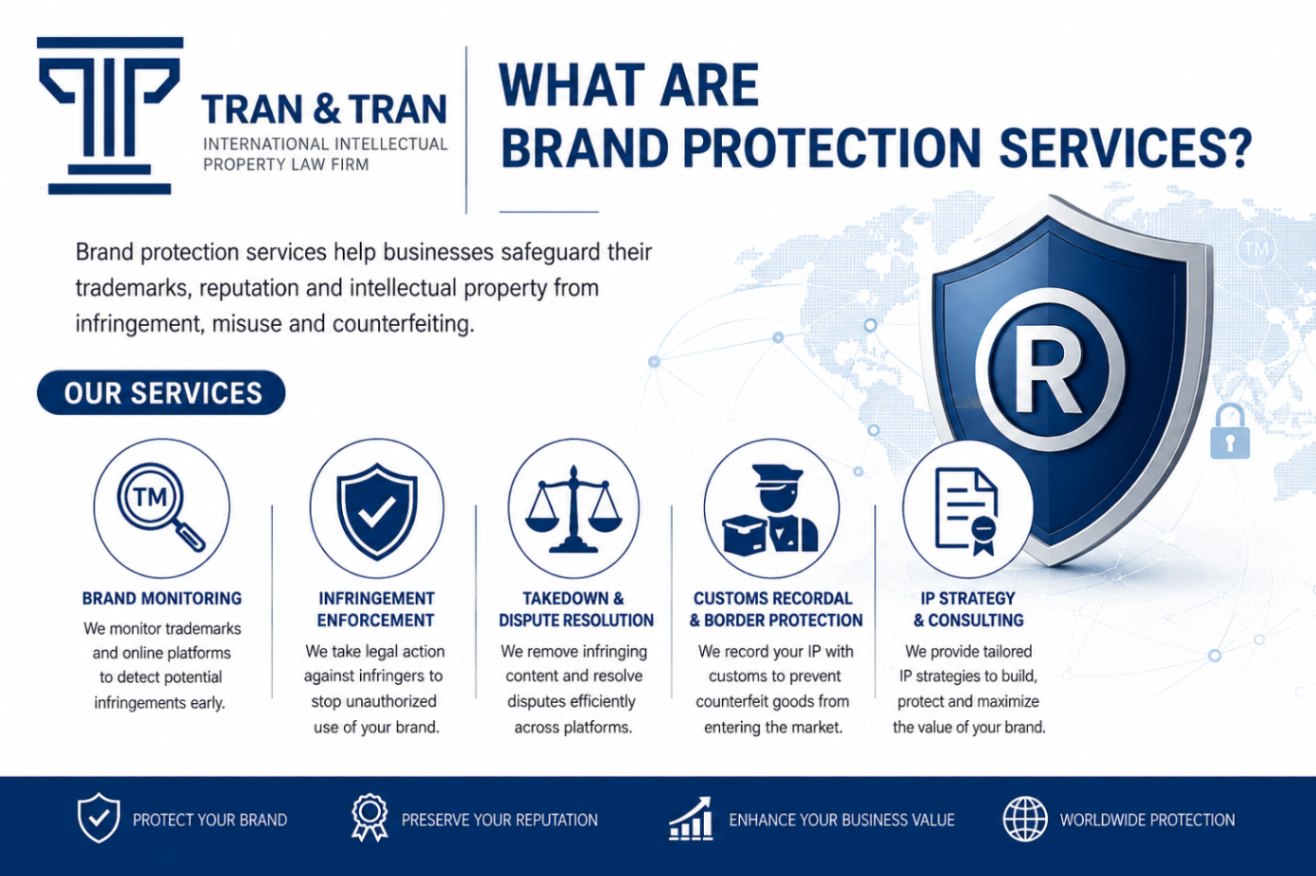
Brand protection services help businesses protect trademarks, brand reputation, product identity, and market value against misuse, imitation, counterfeiting, unauthorized selling, and online infringement. As companies expand across countries, distributors, e-commerce platforms, and digital channels, brand risks become more complex and more difficult to control without a structured protection strategy.
For many businesses, brand protection starts with trademark registration, but it should not stop there. A strong brand protection system also includes trademark searches, portfolio management, renewal tracking, marketplace monitoring, anti-counterfeiting actions, domain name monitoring, licensing control, distributor risk management, and enforcement against infringers.
This guide by Tran & Tran explains what brand protection services include, why businesses need them, how they support long-term brand value, and when companies should work with a legal team to protect trademarks and related intellectual property assets.
What are brand protection services?
Brand protection services are professional services designed to help businesses protect brand assets from unauthorized use, imitation, misappropriation, counterfeiting, and market confusion.
A brand may include a company name, product name, logo, slogan, packaging design, domain name, trade dress, copyright-protected content, industrial design, or other intellectual property assets. When these assets are used without permission, the business may suffer loss of revenue, loss of customer trust, weaker market control, and legal disputes.
Brand protection is broader than trademark registration. Trademark registration creates an important legal foundation, but businesses also need ongoing monitoring, enforcement, renewal management, marketplace control, licensing supervision, and portfolio review.
For businesses that are still building their IP foundation, understanding what a trademark is and why trademark registration matters is an important first step before developing a broader brand protection strategy.
Why businesses need brand protection services
Businesses need brand protection services because brand risks often increase as the company grows.
A new business may initially face simple risks, such as a similar brand name or an unregistered logo. As the business expands, the risk profile changes. The company may face fake products, unauthorized online sellers, confusingly similar trademarks, domain name abuse, copied product images, social media impersonation, distributor misuse, marketplace infringement, or bad-faith trademark filings in other countries.
These risks can affect revenue, reputation, customer trust, and market expansion. A counterfeit product may damage consumer confidence. An unauthorized seller may disrupt pricing. A similar trademark may confuse customers. A distributor may register the brand in its own name. A fake website may mislead buyers or collect customer data.
Brand protection should therefore be treated as preventive risk management. Businesses should not wait until infringement becomes serious before taking action. A proactive strategy helps identify risks early, secure trademark rights, monitor the market, and respond before damage becomes harder to control.
What do brand protection services include?
Brand protection services may include several connected legal and commercial activities.
The first component is trademark search and clearance. Before launching a brand, product name, logo, or campaign, the business should check whether similar marks already exist in relevant markets. This helps reduce the risk of refusal, opposition, infringement claims, or rebranding costs.
The second component is trademark registration. Businesses should register trademarks in important markets, including countries where they sell products, manufacture goods, appoint distributors, operate online stores, or plan future expansion.
The third component is trademark portfolio management. Once trademarks are registered, businesses need to track renewal deadlines, ownership records, classes, goods and services, licensing arrangements, and countries where protection remains commercially important.
The fourth component is monitoring. This may include trademark watch, marketplace monitoring, domain monitoring, social media monitoring, and surveillance of fake products or unauthorized sellers.
The fifth component is enforcement. Businesses may need cease and desist letters, opposition actions, cancellation actions, takedown requests, customs support, local counsel coordination, litigation support, or settlement negotiations.
A complete brand protection strategy connects all these activities into one practical system.
Trademark registration as the foundation of brand protection
Trademark registration is often the foundation of effective brand protection services.
A registered trademark gives the business a stronger legal basis to prevent others from using identical or confusingly similar signs for related goods or services. It can support marketplace takedown requests, distributor control, licensing agreements, anti-counterfeiting actions, and investor due diligence.
Without trademark registration, enforcement may become more difficult. A business may still have certain rights in some jurisdictions depending on use, reputation, and local law, but relying only on unregistered rights can create uncertainty. In many countries, early trademark filing is especially important because rights may depend heavily on who files first.
Trademark registration should be planned according to business priorities. A company does not need to register every mark in every country immediately, but it should protect core marks in high-value, high-risk, and expansion markets.
Businesses that need structured filing support can review trademark registration services as part of a broader brand protection plan.
Trademark search and clearance before brand expansion
Trademark search and clearance help businesses reduce legal and commercial risks before launching or expanding a brand.
A search can identify earlier trademarks that may block registration, create opposition risk, or expose the business to infringement claims. It can also help evaluate whether a proposed name is distinctive, available, and commercially safe.
This step is especially important before launching a new product line, entering a new country, translating a brand into another language, appointing distributors, investing in packaging, or opening an online store.
For international expansion, clearance should not be limited to one country. A brand that is available in one jurisdiction may face obstacles in another. A similar mark may exist in a key export market, manufacturing country, or e-commerce destination.
Trademark search is not only a legal check. It is a business decision tool. It helps companies avoid rebranding costs, filing refusals, marketplace disputes, and conflicts with earlier rights.
Online brand protection and marketplace enforcement
Online brand protection is now a core part of brand protection services.
Businesses can face infringement through e-commerce platforms, fake websites, unauthorized product listings, misleading ads, copied product images, social media impersonation, fake accounts, and domain names that imitate the brand.
Marketplace infringement can move quickly. A seller may list counterfeit goods, copy product descriptions, use the brand name in listing titles, or mislead customers with unauthorized images. If the business does not monitor platforms regularly, infringing listings may damage brand trust before they are detected.
Online brand protection services may include monitoring marketplace listings, collecting evidence, preparing takedown requests, filing complaints against sellers, tracking repeat offenders, and coordinating with platform enforcement systems.
For companies selling through cross-border e-commerce, registered trademark rights are often important because many platforms require proof of trademark ownership before allowing brand enforcement actions.
Anti-counterfeiting services and fake product control
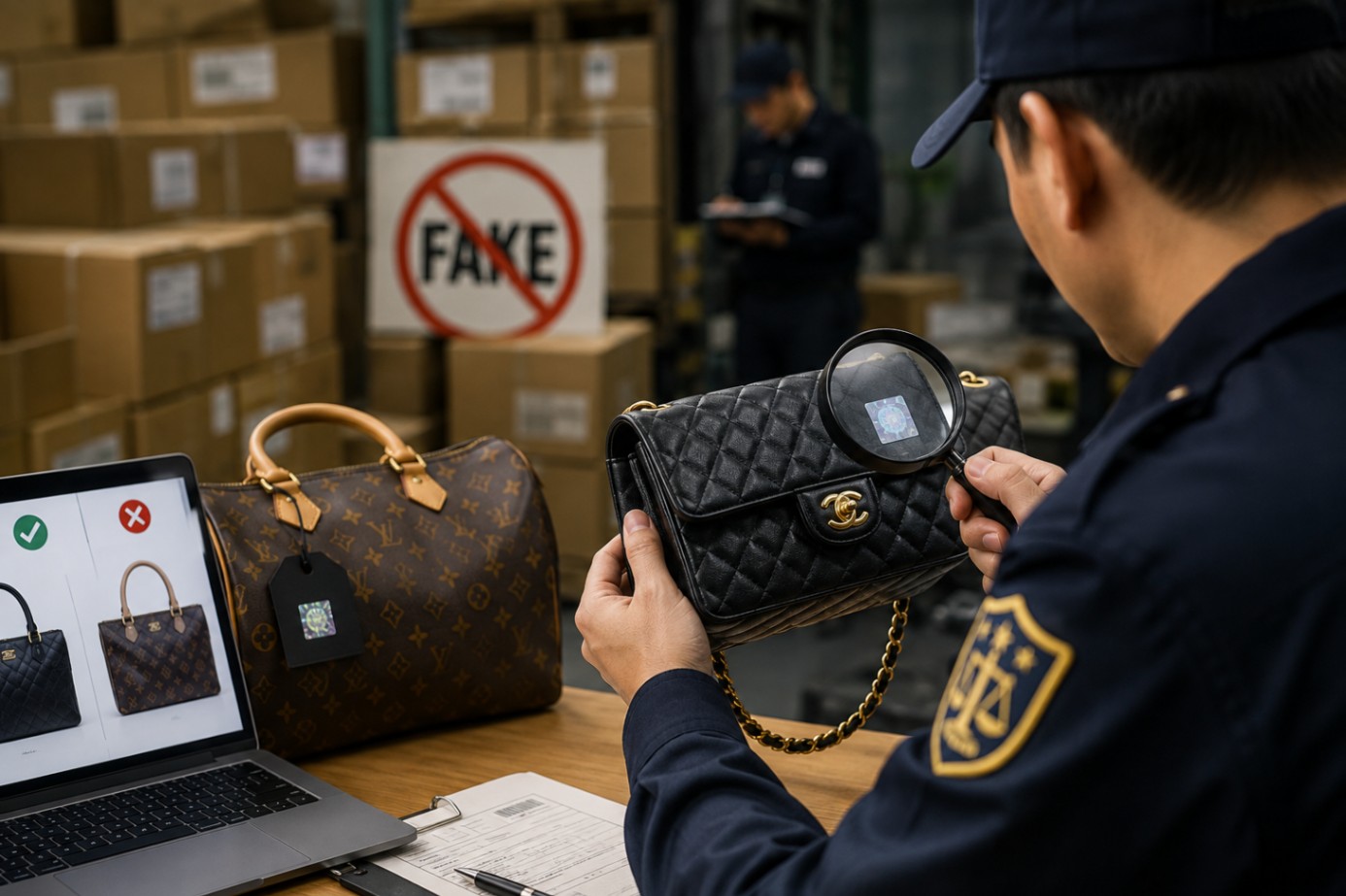
Anti-counterfeiting is one of the most important areas of brand protection services.
Fake products can harm businesses in several ways. They can reduce legitimate sales, damage brand reputation, create consumer safety concerns, weaken distributor relationships, and undermine pricing control. For industries such as fashion, cosmetics, consumer goods, electronics, software, medical devices, and food-related products, counterfeit risks can be especially serious.
Anti-counterfeiting services may include market monitoring, online surveillance, evidence collection, warning letters, marketplace takedowns, coordination with local authorities, customs support, and enforcement against manufacturers, sellers, importers, or distributors involved in counterfeit activity.
A strong anti-counterfeiting strategy should identify where fake products appear, how they are distributed, which platforms or physical markets are involved, and whether enforcement should focus on sellers, suppliers, warehouses, importers, or manufacturers.
Counterfeit control is most effective when it is supported by registered IP rights, clear ownership records, product authentication practices, and consistent monitoring.
Trademark watch and infringement monitoring
Trademark watch is the process of monitoring newly filed trademark applications to detect marks that may conflict with a business’s existing brand.
This is important because a conflicting trademark application may become a registration if the business does not detect and oppose it in time. Once a confusingly similar mark is registered, it may become harder and more expensive to challenge.
Trademark watch services can monitor identical marks, similar marks, phonetic variations, translated marks, transliterations, logos, related classes, and high-risk jurisdictions.
Infringement monitoring should also extend beyond trademark registers. Businesses should monitor domain names, marketplace listings, social media accounts, product packaging, advertising materials, app stores, and websites that misuse brand assets.
A strong monitoring system gives businesses early warning. It allows the company to act before infringement becomes widespread, before consumers are confused, and before another party gains stronger rights.
International brand protection services for global businesses
International brand protection services are important for companies that operate or plan to operate across borders.
A global business needs to decide where to file trademarks, how to prioritize countries, how to manage renewals, how to monitor infringement, and how to respond when brand misuse happens in different jurisdictions.
International brand protection may involve national filings, regional filings, Madrid System filings, trademark portfolio management, local counsel coordination, customs measures, distributor control, marketplace enforcement, and monitoring of bad-faith filings.
The strategy should reflect business reality. A company may need protection in countries where it sells products, manufactures goods, stores inventory, appoints distributors, operates online stores, has major customers, or plans future expansion.
International protection also requires budget discipline. Businesses should not file everywhere without strategy, but they should not leave important markets unprotected. The best approach is to prioritize core marks, key countries, high-risk markets, and business-critical product categories.
For businesses managing multiple countries, international trademark portfolio management can help connect filing, renewal, monitoring, and enforcement into one coordinated system.
Brand protection for startups, exporters, and e-commerce brands
Different businesses face different brand protection risks.
Startups need brand protection services because brand ownership can affect fundraising, product launch, app store presence, investor due diligence, and long-term valuation. A startup that delays trademark filing may later discover that another party has filed a similar or identical mark in an important market. For startup-focused strategy, businesses can review trademark lawyer for startups.
Exporters need brand protection in sales markets, manufacturing countries, distributor territories, and logistics hubs. A brand that is protected only in the home country may be vulnerable abroad, especially if the company works with international distributors or enters first-to-file jurisdictions.
E-commerce brands need online monitoring and platform enforcement. Their risks often include unauthorized sellers, fake listings, copied product images, misleading keywords, counterfeit products, and fake social media accounts.
Franchise and licensing businesses need strong control over trademark use. Contracts should match the actual scope of trademark rights, and the business should monitor whether franchisees, licensees, or distributors use the brand correctly.
How to build a brand protection strategy
A practical brand protection strategy should begin with an audit of brand assets.
The business should identify its core trademarks, logos, product names, slogans, packaging, domain names, copyright content, designs, and other brand-related IP. It should then determine which assets are most valuable, which markets are most important, and where the business faces the highest risk.
Next, the business should conduct trademark searches for new brands and expansion markets. This helps reduce the risk of conflict before money is spent on packaging, advertising, domain names, and market launch.
After clearance, the business should file trademark applications in priority markets. These may include current sales countries, manufacturing locations, distributor markets, online sales destinations, and future expansion markets.
The business should then establish monitoring. This includes trademark watch, marketplace monitoring, domain monitoring, social media monitoring, and internal reporting from sales teams, distributors, and customers.
Finally, the business should prepare an enforcement process. This should identify who collects evidence, who approves action, which platforms or authorities may be involved, and when the matter should be escalated to legal counsel.
Brand protection is not a one-time project. It should be reviewed regularly as the business grows.
Common brand protection mistakes
One common mistake is waiting until infringement occurs before registering trademarks. By that time, the business may face higher costs, weaker leverage, or difficult disputes.
Another mistake is protecting the brand only in the home country. For businesses that export, manufacture, sell online, or work with international partners, protection should be reviewed in key foreign markets.
A third mistake is failing to monitor marketplaces. Even with registered trademarks, infringement can continue if unauthorized sellers and fake listings are not detected.
A fourth mistake is not controlling distributors. A distributor may misuse the brand, exceed contractual rights, register marks locally, or sell outside the agreed territory.
A fifth mistake is not updating ownership records. If the company has changed its name, address, group structure, or trademark owner, outdated records may affect enforcement, licensing, or due diligence.
Another frequent mistake is assuming that trademark registration alone is enough. Registration is important, but businesses also need monitoring, renewal management, enforcement readiness, and commercial controls.
How much do brand protection services cost?
The cost of brand protection services depends on the scope of work.
Cost factors may include the number of trademarks, number of countries, number of classes, filing strategy, trademark search depth, monitoring scope, number of marketplaces, volume of infringement, urgency, local counsel involvement, opposition actions, takedown requests, customs support, and enforcement complexity.
A startup seeking trademark filing in one country may have a different cost structure from a global brand monitoring multiple marketplaces and handling counterfeit products across several jurisdictions.
Businesses should be cautious with fixed assumptions. Brand protection costs should be assessed based on the actual portfolio, target markets, risk level, enforcement needs, and commercial objectives.
A clear proposal should separate filing costs, monitoring costs, renewal costs, enforcement costs, professional fees, official fees, local counsel fees, and additional costs for urgent or complex matters.
When should businesses work with a brand protection lawyer?
Businesses should work with a brand protection lawyer when brand value, legal risk, or market expansion becomes important.
Legal support is useful before launching a new brand, entering a new country, appointing distributors, signing license agreements, opening e-commerce channels, preparing for fundraising, or expanding into franchise models.
A lawyer is also important when the business discovers fake products, unauthorized sellers, confusingly similar trademarks, bad-faith filings, copied packaging, social media impersonation, or domain name abuse.
A brand protection lawyer can help assess rights, build filing strategy, coordinate searches, manage trademark applications, review licenses, send warning letters, file oppositions, prepare takedowns, coordinate local counsel, and support enforcement.
The purpose of legal support is not only to react to infringement. It is to build a system that prevents avoidable risk, protects commercial value, and gives the business a stronger position when disputes arise.
Brand protection services at Tran & Tran
Tran & Tran supports businesses in protecting and managing intellectual property rights in Vietnam and other Asian jurisdictions. The firm’s work covers trademarks, patents, industrial designs, copyright, trade secrets, enforcement, licensing, and IP portfolio strategy.
For brand protection services, Tran & Tran can assist with trademark searches, trademark filing, brand clearance, trademark registration strategy, trademark portfolio management, renewal tracking, ownership recordal, licensing review, marketplace enforcement, anti-counterfeiting support, infringement monitoring, warning letters, opposition strategy, cancellation actions, and coordination with local counsel.
For businesses entering Vietnam or Southeast Asia, Tran & Tran can help identify brand risks, secure trademark rights, monitor unauthorized use, manage distributors, and respond to infringement in a practical and commercially focused way.
A strong brand protection plan should combine legal rights, market monitoring, documentation, enforcement readiness, and regular portfolio review. Tran & Tran supports businesses in building that system so brand assets remain protected as the company grows.
Conclusion
Brand protection services help businesses protect trademarks, prevent infringement, fight counterfeits, control online misuse, and preserve long-term brand value. In competitive and digital markets, brand risks can arise from many sources, including counterfeiters, unauthorized sellers, similar marks, fake websites, copied product content, and uncontrolled distributors.
A strong brand protection strategy should begin with trademark clearance and registration, then continue with portfolio management, monitoring, renewal tracking, marketplace enforcement, anti-counterfeiting actions, and regular legal review.
For businesses expanding across countries or online channels, proactive brand protection is more effective than reacting after damage occurs. It helps preserve customer trust, maintain market control, and strengthen the legal foundation of the brand.
FAQ about brand protection services
What are brand protection services?
Brand protection services are services that help businesses protect brand assets from unauthorized use, counterfeiting, confusingly similar marks, online infringement, marketplace misuse, and other risks.
Why do businesses need brand protection services?
Businesses need brand protection services to protect revenue, reputation, customer trust, market position, distributor control, and long-term brand value.
What is included in brand protection services?
Brand protection services may include trademark search, trademark registration, portfolio management, renewal tracking, trademark watch, marketplace monitoring, anti-counterfeiting actions, takedowns, warning letters, and enforcement support.
Is trademark registration enough to protect a brand?
Trademark registration is important, but it is not enough by itself. Businesses also need monitoring, enforcement, renewal management, licensing control, and portfolio review.
How do brand protection services help fight counterfeits?
They help by identifying fake products, collecting evidence, filing takedown requests, sending warnings, coordinating with platforms or authorities, and supporting enforcement actions.
What is online brand protection?
Online brand protection focuses on detecting and addressing brand misuse on e-commerce platforms, websites, domain names, social media, advertising channels, and digital marketplaces.
What is trademark watch?
Trademark watch is the monitoring of new trademark applications to detect identical or similar marks that may conflict with a business’s existing brand.
When should a business start brand protection?
A business should start brand protection before launching a brand, entering a new market, appointing distributors, selling online, or investing heavily in marketing.
How much do brand protection services cost?
Costs depend on the number of trademarks, countries, classes, monitoring scope, enforcement needs, marketplaces involved, local counsel support, and complexity of the matter.
Do businesses need a lawyer for brand protection services?
A lawyer is recommended when the business needs trademark registration, international filing strategy, marketplace enforcement, anti-counterfeiting support, licensing control, or action against infringers.
