


Who is the author of Sherlock Holmes is the starting inquiry into the life of the most famous, perceptive, and enduring consulting detective in world literature. The author behind the iconic investigator residing at 221B Baker Street and his loyal companion, Dr. John H. Watson, is the Scottish physician, novelist, and journalist: Sir Arthur Conan Doyle.
For well over a century, the curved pipe, the deerstalker cap, and the extraordinary deductive reasoning of Sherlock Holmes have transcended the printed page to become an immortal cultural archetype across the globe. Preserving and governing such monumental creative legacies requires a deep understanding of international copyright registration and portfolio governance to ensure that intellectual assets remain securely protected across borders.
1. Who Is the Author of Sherlock Holmes? A Detailed Biography of Sir Arthur Conan Doyle
Sir Arthur Conan Doyle was born on May 22, 1859, in Edinburgh, Scotland, and passed away on July 7, 1930, in Crowborough, Sussex, England, at the age of 71. He was a trained physician, prolific novelist, war correspondent, and dedicated social reformer of the Victorian and Edwardian eras.
Conan Doyle was raised in a creative yet impoverished Irish-Catholic family with a distinguished tradition in the visual arts and illustration. His youth was marked by hardship due to his father’s chronic alcoholism, which strained household finances. Supported by wealthier relatives, he attended prestigious Jesuit boarding institutions in England and Austria, where he discovered an early talent for classical literature, poetry, and storytelling among his peers.
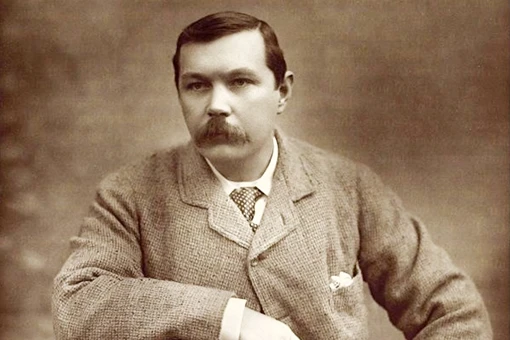
In 1876, Conan Doyle enrolled at the University of Edinburgh Medical School. This rigorous scientific environment trained him in empirical logic, forensic observation, and clinical diagnostics—methodologies that later formed the foundation of his detective fiction.
During his clerkship at the Royal Infirmary of Edinburgh, Conan Doyle served as an outpatient assistant to Professor Joseph Bell, a distinguished surgeon and medical lecturer. Dr. Bell was renowned for his diagnostic precision: by observing a patient’s posture, gait, accent, hand calluses, or garment stains, he could accurately determine their occupation, geographic origin, and medical history before they spoke.
Dr. Bell served as the primary real-world archetype for the legendary detective. Original manuscripts and historical archives documenting Conan Doyle’s medical education and notes are preserved at The British Library, standing as a testament to the enduring cultural significance of his detective canon.
2. Transition to Literature and the Birth of Sherlock Holmes
Following his graduation as a Bachelor of Medicine in 1881, Conan Doyle served as a ship’s surgeon on commercial vessels traveling to West Africa and the Arctic. In 1882, he established an independent medical practice in Southsea, Portsmouth.
During the practice’s early months, patient visits were rare. Rather than lamenting his empty waiting room, Conan Doyle utilized his desk hours to write short stories for popular periodicals to supplement his income.
In 1886, drawing upon Dr. Joseph Bell’s methods and Edgar Allan Poe’s fictional detective C. Auguste Dupin, Conan Doyle began a full-length mystery initially titled A Tangled Skein. The protagonists were originally drafted under the working names Sherrinford Holmes and Ormond Sacker.

Conan Doyle subsequently finalized the names as Sherlock Holmes (adopting the surname in tribute to American jurist and physician Oliver Wendell Holmes) and Dr. John H. Watson.
The novel, retitled A Study in Scarlet, faced multiple editorial rejections before Ward Lock & Co. purchased the manuscript in 1887 for 25 pounds, publishing it in Beeton’s Christmas Annual. The publication marked the debut of the detective duo at 221B Baker Street. In modern business practice, creating and defining distinctive character personas and titles parallels the strategic importance of trademark clearance and brand establishment strategies to secure commercial distinctiveness from day one.
3. The Canon of Sherlock Holmes (The Conan Canon)
The official body of Sherlock Holmes works written directly by Sir Arthur Conan Doyle—known among literary scholars as The Canon—encompasses four full-length novels and fifty-six short stories.
The Four Classical Novels
- A Study in Scarlet (1887): The Brixton murder investigation that established the partnership between Holmes and Watson.
- The Sign of the Four (1890): The investigation of the stolen Agra treasure, a pact among four convicts, and the introduction of Mary Morstan, Dr. Watson’s future wife.
- The Hound of the Baskervilles (1902): A gothic mystery set on the Dartmoor moors, unravelling the spectral curse haunting the Baskerville lineage.
- The Valley of Fear (1915): The Birlstone Manor homicide, which uncovers a secret society in Pennsylvania coal country and reveals the influence of Professor James Moriarty.
The Five Short Story Collections
The popularity of the series grew through serialized publication in The Strand Magazine:
- The Adventures of Sherlock Holmes (1892): Twelve stories, including A Scandal in Bohemia (introducing Irene Adler), The Red-Headed League, and The Adventure of the Speckled Band.
- The Memoirs of Sherlock Holmes (1894): Eleven stories detailing notable cases, concluding with the fatal confrontation at the Reichenbach Falls.
- The Return of Sherlock Holmes (1905): Thirteen stories detailing Holmes’s reappearance following years of presumed death.
- His Last Bow (1917): Eight investigative stories addressing pre-World War I espionage and state security.
- The Case-Book of Sherlock Holmes (1927): Twelve final cases concluding the official literary narrative.
For historic print media, serialized magazines, and character-driven merchandising, protecting proprietary artistic illustrations and physical form factors follows principles similar to contemporary patent and industrial design prosecution standards.
4. The Complex Relationship Between Conan Doyle and His Creation
Despite the commercial success and acclaim brought by Sherlock Holmes, Conan Doyle maintained an ambivalent view of his detective. He considered himself primarily an author of serious historical fiction (such as The White Company and Sir Nigel). He felt detective fiction was a lighter pursuit that diverted critical appreciation from his historical and scholarly writing.
Seeking to end the series, Conan Doyle arranged the confrontation in The Final Problem (1893) where Holmes and Professor James Moriarty plunged over the Reichenbach Falls in Switzerland.
The demise of Holmes caused widespread public dismay: more than 20,000 readers canceled subscriptions to The Strand Magazine, professionals in London wore black mourning armbands, and the author received numerous letters urging him to continue the stories. In response to persistent reader demand and commercial offers from publishers, Conan Doyle returned to the character in 1903 in The Adventure of the Empty House, explaining that Holmes had survived the incident through knowledge of the Japanese martial art Baritsu.
Such high-stakes tensions between creator intentions, commercial expectations, and public adaptations showcase the complexities addressed in modern intellectual property dispute resolution and enforcement to safeguard brand integrity across various channels.
5. Life Beyond Literature and Social Impact
Sir Arthur Conan Doyle led an active life outside of his writing desk and made significant contributions to society:
During the Second Boer War in South Africa (1900), he served as a volunteer physician at the Langman Field Hospital in Bloemfontein, treating soldiers during a major typhoid epidemic. For his wartime medical service and his analytical publication The War in South Africa: Its Cause and Conduct, he was knighted by King Edward VII in 1902.
Conan Doyle also applied forensic and circumstantial analysis to investigate real-world miscarriages of justice, contributing directly to the exoneration of George Edalji and Oscar Slater. His advocacy efforts contributed to the establishment of the English Court of Criminal Appeal in 1907. Readers interested in comparative legal analysis and investigative methodologies can follow updates within our curated legal news and intellectual property insights.
An active sportsman, he played first-class cricket for the Marylebone Cricket Club (MCC), played as an amateur football goalkeeper for Portsmouth Association Football Club, and helped popularize downhill skiing in Switzerland.
6. The Enduring Legacy of Sherlock Holmes
More than 130 years after his literary debut, Sherlock Holmes holds the Guinness World Record as the most portrayed human literary character in film and television history.
Notable 21st-century interpretations include Robert Downey Jr. in Guy Ritchie’s cinematic releases and Benedict Cumberbatch in the contemporary BBC television series Sherlock. The address 221B Baker Street in London operates as the Sherlock Holmes Museum, receiving visitors from around the world annually. Conan Doyle’s investigative mechanics also established foundational conventions for modern mystery authors, including Gosho Aoyama, creator of the serialized manga Case Closed (Detective Conan).
7. About Tran & Tran Intellectual Property Co., Ltd.
Established in 2013, Tran & Tran Intellectual Property Co., Ltd. is an accredited Industrial Property Representation Organization assisting authors, entertainment creators, and corporations in securing their intangible assets across Vietnam and the broader Southeast Asian region. To learn more about our founding partners and cross-border capabilities, please visit our corporate overview and leadership profile.
Whether you are adapting a narrative work, commercializing a creative franchise, or structuring multi-jurisdictional brand protection, our legal team provides dedicated guidance. Reach out directly via our inquiry and legal consultation portal to safeguard your creative endeavors.
Frequently Asked Questions (FAQ)
- What were the birth and death years of the author of Sherlock Holmes?
Sir Arthur Conan Doyle was born on May 22, 1859, in Edinburgh, Scotland, and passed away on July 7, 1930, in Crowborough, Sussex, England.
- When was the first Sherlock Holmes novel published?
The first novel, A Study in Scarlet, was written in 1886 and officially published in November 1887 in Beeton’s Christmas Annual.
- Was Sherlock Holmes based on an actual historical person?
Sherlock Holmes was a fictional creation. However, his mannerisms, analytical demeanor, and forensic methods were drawn from Conan Doyle’s former medical professor, Dr. Joseph Bell.
- How many total works did Conan Doyle write about Sherlock Holmes?
The official Canon written personally by Sir Arthur Conan Doyle consists of four novels and fifty-six short stories.
