


Who wrote Romeo and Juliet is the foundational question opening the exploration of an immortal tragic romance that has moved audiences across more than four centuries. The visionary dramatist behind the passionate yet ill-fated love between Romeo Montague and Juliet Capulet in Renaissance Verona is William Shakespeare—the greatest playwright in English literature and a towering figure in Western dramatic arts.
Across generations, Romeo and Juliet has transcended Elizabethan playhouses to be continuously adapted into Hollywood feature films, Broadway musicals, derivative novels, and modern pop-culture productions. From a contemporary legal perspective, this work serves as an ideal case study for understanding the public domain and the establishment of intellectual property rights over derivative works.
The analytical team at Tran & Tran Intellectual Property Co., Ltd. (Tran & Tran Law) has compiled this comprehensive guide, blending literary history with modern intellectual property frameworks.
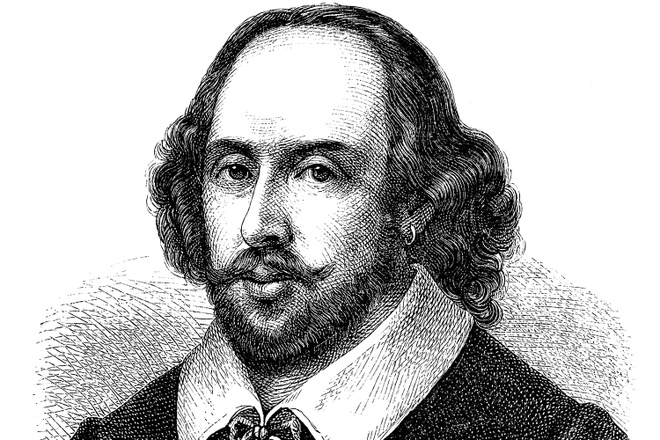
1. Who Wrote Romeo and Juliet? A Detailed Biography of William Shakespeare
William Shakespeare was baptized on April 26, 1564 (traditionally celebrated as born on April 23, 1564) in Stratford-upon-Avon, Warwickshire, England. He passed away on April 23, 1616, at the age of 52.
He is widely celebrated as the “Bard of Avon” or England’s national poet.
1.1. Lineage and Classical Education
Shakespeare’s father, John Shakespeare, was a prosperous glover and city alderman, while his mother, Mary Arden, came from a prominent landowning family. Benefiting from his family’s status, young Shakespeare attended the King’s New School in Stratford. There, he received rigorous training in Latin grammar, classical literature (including Ovid, Seneca, and Cicero), and rhetoric—forming the educational foundation for his dramatic craftsmanship.
In 1582, at age 18, Shakespeare married Anne Hathaway, with whom he had three children: Susanna and twins Hamnet and Judith.
1.2. The Lost Years and Emergence in London
The period between 1585 and 1592 is referred to by historians as Shakespeare’s “Lost Years,” as minimal historical documentation survives regarding his whereabouts.
By 1592, Shakespeare was established in London as a respected actor and playwright. He became a key partner in the theatrical company Lord Chamberlain’s Men (later renamed The King’s Men under King James I). He served not only as resident playwright but also as a joint shareholder of the iconic Globe Theatre on the River Thames, where many of his greatest plays were performed before both public audiences and the royal court.
2. Historical Background and Narrative Structure of Romeo and Juliet
William Shakespeare composed Romeo and Juliet between 1591 and 1595. It was first published in 1597 as an unauthorized quarto edition (Q1).
2.1. Creative Origins and Adaptation
While Shakespeare penned the play, he did not invent the story from scratch. He based his play on Arthur Brooke’s narrative poem The Tragical History of Romeus and Juliet (1562), which was derived from earlier French and Italian prose by Matteo Bandello.
Through poetic dialogue, dynamic pacing, and complex character development, Shakespeare transformed a traditional moralizing tale into an enduring drama about individual agency, hostile fate, and the tragic price of civil division.
2.2. Plot Overview
Set in Verona, Italy, two noble families—the Montagues and the Capulets—are locked in an ancient feud that repeatedly disrupts civic peace. Romeo, heir of the Montagues, attends an uninvited masquerade at the Capulet estate, where he meets Juliet, the young daughter of the Capulets. They fall deeply in love at first sight.
Defying familial hostility, they are married in secret by Friar Laurence, who hopes the union will reconcile the families. However, conflict erupts when Tybalt (Juliet’s cousin) slays Mercutio (Romeo’s close companion). Romeo kills Tybalt in retaliation and is exiled from Verona by the Prince.
To prevent an arranged marriage to Count Paris, Juliet takes a potion provided by Friar Laurence that mimics death for 42 hours. Due to an outbreak of plague, the messenger carrying news of the ruse fails to reach Romeo. Believing Juliet to be truly dead, Romeo procures poison, visits the Capulet crypt, and drinks the fatal draught by her side. Awakening to find Romeo dead, Juliet ends her life with his dagger. Their tragic deaths ultimately lead the grief-stricken patriarchs to end their feud.

3. The Literary Canon of William Shakespeare
Shakespeare’s portfolio comprises approximately 39 plays, 154 sonnets, and 2 long narrative poems:
- Major Tragedies: Alongside Romeo and Juliet, his four celebrated master tragedies are Hamlet, Othello, King Lear, and Macbeth.
- Romantic and Pastoral Comedies: A Midsummer Night’s Dream, Twelfth Night, The Merchant of Venice, and The Taming of the Shrew.
- English History Plays: Dramatizations such as Richard III, Henry V, and Julius Caesar, examining statecraft, moral authority, and political ambition.
- The Sonnets: A collection of 154 poems following the Shakespearean sonnet form, exploring themes of time, mortality, love, and artistic immortality.
4. Legal Analysis: Copyright Status, the Public Domain, and Derivative Works
From the perspective of intellectual property practitioners at Tran & Tran, Romeo and Juliet serves as a classic demonstration of statutory copyright expiration and the mechanics of downstream derivative protection.
4.1. Public Domain Status
Under statutory copyright frameworks and international treaties like the Berne Convention:
- Copyright protection over literary and dramatic works lasts for the author’s lifetime plus an additional 50 to 70 years posthumously, depending on national jurisdictions.
- William Shakespeare died in 1616—more than four centuries ago. Consequently, the original text and characters of Romeo and Juliet reside in the public domain.
This status allows publishers, directors, and cultural creators worldwide to reproduce, distribute, perform, and adapt the underlying play without seeking licenses or paying royalties to Shakespeare’s heirs.

4.2. Copyright Protection for Derivative Works
While the foundational text is free for public use, new adaptations built upon Romeo and Juliet qualify for separate copyright protection as derivative works:
- Translations: Distinct language translations enjoy standalone copyright in their translated prose. Using a protected modern translation for publication or stage performance requires prior authorization from the translator or copyright assignee.
- Cinematic and Theatrical Adaptations: Baz Luhrmann’s film Romeo + Juliet (1996) and the musical West Side Story hold complete copyright protection over their original scores, scripts, choreography, and visual recordings.
- Costume Designs and Scenography: Proprietary set designs, wardrobe sketches, and character illustrations produced for a specific staging can be secured through copyright or design patents.
Understanding these boundaries helps creators distinguish the statutory boundary between trademarks and commercial brands and clarify their proprietary rights over derivative creative elements.
4.3. Trademark Protection Derived from Classical Titles
While the title “Romeo and Juliet” is in the public domain, businesses may register distinctive variations as commercial trademarks for specific products or services (e.g., luxury perfumery, boutique hospitality venues, or bridal jewelry collections).
Evaluating the availability of such marks requires thorough online brand and copyright clearances across official registers to preempt conflicting prior rights.
For large-scale international theatrical productions requiring specialized stage props, period armor, and detailed structural sets, manufacturing processes must meet strict quality standards comparable to industrial manufacturing and product design fabrication to ensure durability, physical safety, and ornamental uniqueness.
5. Strategic Benefits of Registering Derivative Rights
The commercial legacy of classic literary works highlights the value of formal IP registration:
- Establishing Enforceable Title: Registering an adapted script, animation storyboard, or derivative score with national copyright authorities provides clear legal documentation of ownership over newly created material.
- Deterring Unauthorized Commercial Reproduction: Official registration certificates enable creators to issue enforceable takedowns against unauthorized digital uploads and defend distribution rights in streaming or publishing negotiations.
- Minimizing Procedural Delays: Preparing formal application materials in accordance with administrative standards, similar to the requirements for an official trademark application declaration, ensures straightforward processing by administrative offices.
6. Intellectual Property Advisory Practice at Tran & Tran Law
Established in September 2013, Tran & Tran Intellectual Property Co., Ltd. (Tran & Tran Law / Tran & Tran IP) is an officially recognized Industrial Property Representation Organization accredited by the Intellectual Property Office of Vietnam.
Our legal team provides comprehensive intellectual property services across the entertainment, publishing, and media sectors:
- Copyright Registration for Scripts and Derivative Works: Securing official copyright registration for translations, adapted screenplays, stage designs, and music compositions.
- Public Domain Due Diligence: Auditing legacy texts to confirm public domain status and evaluating infringement risks in prospective adaptations.
- Licensing and Option Agreements: Drafting and negotiating production agreements, performance licenses, translation releases, and digital distribution rights.
- Anti-Piracy Enforcement and Litigation: Formulating enforcement actions, dispatching Cease & Desist demands, and representing rights holders in resolving digital infringement disputes.
Additionally, for international performing troupes and cultural enterprises transporting stage equipment, costumes, and props across borders, partnering with licensed logistics providers like TCL Freight ensures compliant customs declarations, ATA carnet processing, and safe logistics handling.
To review our complete capabilities, visit our professional IP services portal or explore our corporate profile at trantranlaw.com.
7. Conclusion
William Shakespeare, the author of Romeo and Juliet, created an enduring cultural touchstone. Residing safely in the public domain, the play remains an open source of inspiration for writers, directors, and creators worldwide.
Whether you are staging a modern theatrical adaptation, developing a screenplay inspired by classical narratives, or building a cultural enterprise, Tran & Tran Law provides the strategic legal foundation needed to secure your creative output.
Frequently Asked Questions (FAQ)
- When was the author of Romeo and Juliet born, and when did he pass away?
William Shakespeare was born in April 1564 (traditionally marked as April 23, 1564) and died on April 23, 1616, in Stratford-upon-Avon, England.
- When was Romeo and Juliet composed?
The play was written between 1591 and 1595, and first appeared in print in an unauthorized quarto edition in 1597 before its inclusion in the authoritative 1623 First Folio.
- Can I adapt Romeo and Juliet into a film or novel without licensing fees?
Yes. The original text by Shakespeare is in the public domain, allowing anyone to adapt the core plot, dialogue, and characters without royalty payments. However, utilizing a modern third-party translation requires written permission from the translation’s copyright holder.
- How long does copyright registration for derivative works take in Vietnam?
At the Copyright Office of Vietnam, the statutory examination and issuance period for copyright registration certificates generally spans 15 to 20 working days from the submission of a compliant dossier.
Direct Consultation and Contact Details
- Firm: Tran & Tran Intellectual Property Co., Ltd. (Tran & Tran Law / Tran & Tran IP)
- Head Office: Room 802, Talico Building, 22 Ho Giam Street, Van Mieu – Quoc Tu Giam Ward, Dong Da District, Hanoi, Vietnam
- Hotline: +84 (024) 3732 7466
- Email: [email protected]
- Official Websites: trantran.vn | trantranlaw.com
- Office Hours: 8:00 AM – 18:00 PM, Monday through Friday
