


Slam Dunk creator remains one of the most widely researched terms among manga enthusiasts, basketball fans, and intellectual property (IP) legal scholars worldwide. Debuting in 1990 in Weekly Shonen Jump, Slam Dunk (スラムダンク) transcended the boundaries of traditional sports manga to become an enduring global pop culture phenomenon. It ignited a historic basketball boom across Asia and achieved monumental commercial success, surpassing 170 million copies in worldwide print circulation.
Behind the story of red-haired delinquent Hanamichi Sakuragi and the Shohoku High School basketball team stands the celebrated manga artist and storyteller Takehiko Inoue. Renowned for his hyper-realistic draftsmanship and mastery of human kinetic anatomy, Takehiko Inoue also represents an exemplary archetype of a creator maintaining rigorous legal custody and creative control over his artistic legacy within a publishing partnership with media conglomerate Shueisha.
The legal analysis below by Tran & Tran Intellectual Property Co., Ltd. examines the creator’s artistic career, the commercial framework of the franchise, and the multi-layered copyright architecture safeguarding the Slam Dunk intellectual property empire.
1. Profile of Takehiko Inoue: Creative Origins and Artistic Mastery
The philosophical depth, narrative tension, and enduring resonance of Slam Dunk originate from the personal athletic passion and draftsmanship of master artist Takehiko Inoue (born Takehiko Nariai – 成合 雄彦).
1.1. Youth Athletic Foundations
Born on January 12, 1967, in Kagoshima Prefecture, Japan, Inoue was an avid basketball player throughout his high school years, despite the sport occupying a niche status in Japan at the time compared to baseball and association football. After honing his skills as an assistant to legendary manga artist Tsukasa Hojo (creator of City Hunter), Inoue perfected his dynamic line control, perspective foreshortening, and lifelike human anatomical precision.
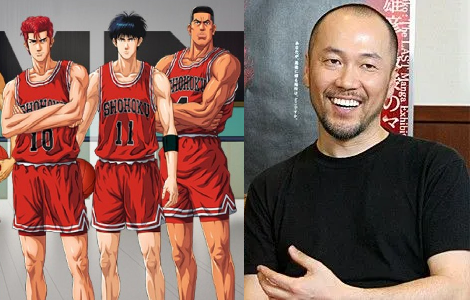
1.2. The Golden Era of Slam Dunk (1990–1996)
- Pioneering Authentic Sports Manga. Serialized across 276 chapters in Shueisha’s Weekly Shonen Jump from 1990 to 1996 and subsequently collected into 31 tankobon volumes, Slam Dunk revitalized the sports manga landscape.
- Evolution into Visual Fine Art. Starting as an irreverent high school comedy centered on an impulsive delinquent taking up basketball to impress a classmate, Inoue’s narrative matured into a sports epic. This transformation culminated in the climactic Inter-High clash between Shohoku and Sannoh Industry, featuring extensive sequences without dialogue that conveyed athletic speed, parquet floor sneaker friction, and player exhaustion purely through kinetic visual storytelling.
- Subsequent Masterworks. Following Slam Dunk, Inoue continued to cement his status through works such as Vagabond (adapting Eiji Yoshikawa’s novel on the historical swordsman Miyamoto Musashi) and Real (exploring the world of wheelchair basketball), earning numerous cultural awards and state honors in Japan.
1.3. Copyright Vesting in Underlying Graphic Art
Under the Berne Convention for the Protection of Literary and Artistic Works and the Copyright Act of Japan, Takehiko Inoue retains perpetual and inalienable moral rights over his original literary and artistic works. Any third-party adaptation, cinematic derivative, special edition republication, or digital interactive software development must respect the artist’s paternity rights and the right to preserve the integrity of the work, prohibiting any commercial exploitation that distorts Inoue’s creative message.
2. Allocation of Intellectual Property Rights: Creator vs. Publishing Syndicate
The commercial success of the Slam Dunk franchise is anchored in a contractual collaboration between the individual author (Takehiko Inoue) and the corporate exploitation licensees (Shueisha / Toei Animation).
2.1. Inalienable Moral Rights Retained by Takehiko Inoue
Inoue maintains strict moral rights that cannot be assigned or waived:
- Right of Paternity and Attribution: Inoue’s name appears on every localized volume, theatrical poster, and officially licensed product worldwide.
- Right to Work Integrity: Within the Japanese manga industry, Inoue is known for his strict oversight regarding the handling of his creative output. Notably, he resisted corporate pressure to produce commercial serialized sequels, preserving the artistic finality of Slam Dunk’s concluding tournament arc.
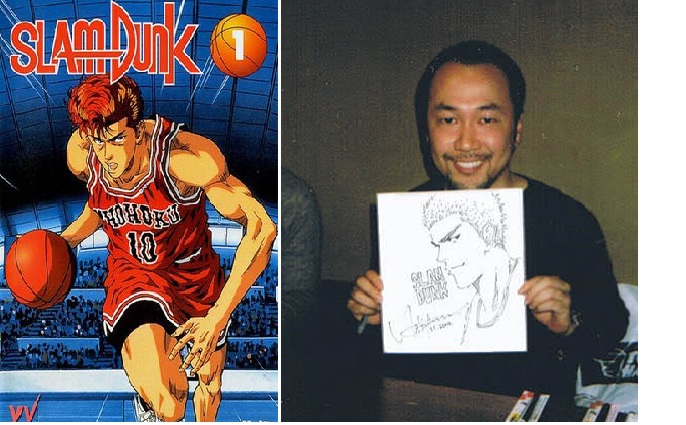
2.2. Economic Rights Administration and I.T.Planning
- Exclusive Publishing Rights: Shueisha holds exclusive global print publishing licenses, managing collector editions (Kanzenban, Shinsouban) and negotiating cross-border translation licenses with overseas publishers.
- Corporate IP Management via I.T.Planning, Inc.: To manage and protect his intellectual property independently, Inoue established his personal rights management entity, I.T.Planning, Inc.. This corporation directly reviews character merchandising authorizations, monitors digital brand usage, and coordinates alongside Shueisha on commercial derivative projects.
When athletic character designs such as Hanamichi Sakuragi, Kaede Rukawa, or Takenori Akagi are manufactured into articulated figurines and scale statues within industrial manufacturing and product design fabrication, applied art copyright protection serves as the primary legal basis for intercepting unauthenticated counterfeit toys and enforcing border seizures.
Intellectual Property Rights Distribution in the Slam Dunk Franchise
| Protected Subject Matter | IP Categorization | Initial Rights Holder | Commercial Monetization Scope |
| Original Manga Artwork | Visual Arts Copyright | Author Takehiko Inoue | Physical tankobon publishing, authorized digital distribution |
| Script and Narrative Plot | Literary Copyright | Author Takehiko Inoue | Foreign language translations, theatrical script adaptations |
| 1990s Television Anime | Cinematographic Copyright | Toei Animation / TV Asahi | Terrestrial broadcast, global streaming platform distribution |
| The First Slam Dunk (2022) | Audiovisual Work | Production Committee / Inoue | Global theatrical distribution, commercial Blu-ray releases |
| “SLAM DUNK” Brand Marks | Registered Trademarks | Shueisha / I.T.Planning | Exclusive apparel, footwear, sporting equipment branding |
3. Copyright Framework of The First Slam Dunk (2022)
More than 26 years after the serialization concluded, the franchise achieved critical and commercial acclaim with the release of the animated feature film The First Slam Dunk in late 2022.
3.1. Inoue Directs and Scripts the Theatrical Adaptation
Unlike the 1990s television adaptation, where the author felt the animation speed and technical fidelity diverged from his artistic vision, Takehiko Inoue personally served as both screenwriter and director for The First Slam Dunk.
- The feature reframed the Shohoku vs. Sannoh match around the personal history and perspective of point guard Ryota Miyagi.
- Inoue personally oversaw the frame-by-frame 3DCG cel-shaded rendering alongside traditional 2D hand-drawn techniques, ensuring anatomical movement, ball handling, and character expressions matched the manga’s visual standards.
3.2. Legal Structure of the Film Production Committee
Grossing over $250 million in global box office receipts, the film operated under Japan’s Production Committee (Seisaku Iinkai) model:
- Toei Animation & Dandelion Animation Studios: Served as primary production and animation development partners.
- I.T.Planning & Shueisha: Retained underlying source rights, script clearances, and final artistic approval.
- Production committee agreements governed international theatrical distribution splits, physical home media rights, and master recording licensing for original soundtrack contributions by musical groups The Birthday and 10-FEET.
Prior to commercializing film-related consumer goods, domestic businesses should assess the statutory boundary between trademarks and commercial brands to distinguish between registered merchandise trademarks and underlying audiovisual copyrights.
4. One Source Multi Use (OSMU) Ecosystem and Collaborative Licensing
Slam Dunk serves as a prominent study in One Source Multi Use (OSMU) cross-industry monetization:
- Footwear and Streetwear Collaborations. The narrative depiction of Sakuragi wearing the Air Jordan 6 and Air Jordan 1 Banned helped accelerate basketball sneaker culture across East Asia. Nike subsequently executed an official global collaboration with Takehiko Inoue, releasing the limited-edition Air Jordan 6 Slam Dunk featuring reflective manga panels, which remains a notable collectible in footwear history.
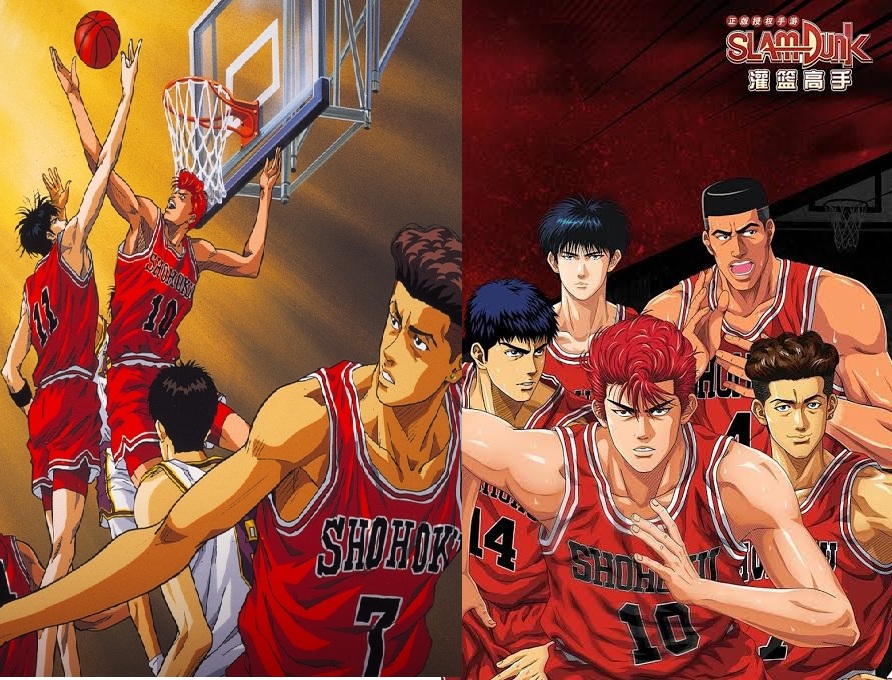
- Apparel and Merchandising Licenses. The Shohoku red uniform designs featuring jersey numbers 10 (Sakuragi), 11 (Rukawa), and 14 (Mitsui) are actively licensed for sportswear manufacturing, generating licensing royalties decades post-serialization.
- Interactive Video Game Adaptations. Video game releases from early Super Famicom and PlayStation titles to the mobile title Slam Dunk Mobile (published by DeNA) require character licensing agreements cleared through I.T.Planning and Toei Animation.
- Cultural Tourism and Pop Culture Heritage. The Kamakurakokomae railway crossing in Kanagawa Prefecture—featured in the television anime’s opening sequence—functions as a major destination for international anime tourism, generating substantial economic activity for local hospitality and municipal transit networks.
To protect commercial investments in imported merchandise, retail enterprises should conduct online brand and copyright clearances to verify that overseas suppliers hold legitimate licensing certificates executed by I.T.Planning or Toei Animation.
5. Countering Manga Piracy and Cross-Border Logistics Controls
The global reach of the Slam Dunk property has historically subjected it to various forms of IP infringement:
- Unauthorized Digital Scans and Translation Groups. Unlicensed scanlation aggregators regularly scrape physical volumes, erase the original Japanese dialogue, and upload unapproved translations to digital platforms monetized through ad networks.
- Counterfeit Apparel and Unlicensed Merchandise. Industrial garment workshops frequently print Shohoku jersey designs and character art onto apparel, water bottles, and posters, distributing unapproved products across online marketplaces.
- Enforcement by Shueisha and CODA. Shueisha, alongside the Content Overseas Distribution Association (CODA), works with international law enforcement agencies to identify and dismantle print piracy and digital syndication networks across Asian markets.
- Customs Inspections and Logistics Security. When importing officially licensed manga box sets or authentic character figurines from Japan, partnering with established freight forwarding specialists like TCL Freight helps enterprises navigate customs declarations, verify documentation, and avoid border delays arising from suspected intellectual property violations.
Maintaining compliance across official administrative forms, comparable to preparing a standard trademark application declaration, ensures domestic importers maintain clear records of product provenance when interacting with customs and market control authorities.
6. Comic and Character Copyright Practice at Tran & Tran Law
Established in 2013, Tran & Tran Intellectual Property Co., Ltd. (Tran & Tran Law / Tran & Tran IP) is an officially licensed Industrial Property Representation Organization. Supporting authors, illustrators, publishers, and digital media companies, we provide a complete suite of comprehensive intellectual property services across creative sectors:
- Manga and Character Copyright Registration: Reviewing literary and visual components, preparing official documentation, and prosecuting applications through the national Copyright Office or the [suspicious link removed] to establish clear legal title.
- International Content Licensing and Adaptation Deeds: Drafting and negotiating translation agreements, publishing distribution rights, character merchandising licenses, and audiovisual adaptation options.
- Digital Copyright Enforcement and Judicial Representation: Preparing electronic bailiff evidence reports, issuing Cease and Desist demand letters, coordinating administrative actions against unauthorized merchandise, and representing clients in court litigation.
To explore our specialized legal solutions, visit our professional IP services portal.
Direct Consultation and Representative Office:
- Entity: Tran & Tran Intellectual Property Co., Ltd. (Tran & Tran Law / Tran & Tran IP)
- Head Office: Room 802, Talico Building, 22 Ho Giam Street, Van Mieu – Quoc Tu Giam Ward, Dong Da District, Hanoi
- Official Websites: trantranlaw.com | trantran.vn
- Practice Areas: Industrial Property Representation, Comic and Visual Art Copyrights, Trademark Filings, Patent Prosecution, Industrial Designs, Commercial Licensing Agreements, and Intellectual Property Dispute Resolution.
