Computer program copyright registration is the procedure for recording copyright ownership over software, apps, SaaS platforms, management systems, or computer programs expressed in source code, object code, and related technical documents. Registration helps businesses obtain stronger evidence of ownership, making commercialization, licensing, fundraising, transfer, or dispute handling more practical.
This article is prepared by Trần & Trần to help businesses understand the required documents, procedure, ownership issues, and important legal notes when registering copyright for computer programs in Vietnam.
Table of Contents
- What is computer program copyright registration?
- Are computer programs protected by copyright in Vietnam?
- Why should businesses register copyright for computer programs?
- Who has the right to register copyright for a computer program?
- What documents are required for computer program copyright registration?
- Procedure for computer program copyright registration
- What information appears on a Copyright Registration Certificate for a computer program?
- Does computer program copyright registration protect software ideas?
- Common mistakes when registering software copyright
- Computer program copyright registration service at Trần & Trần
- FAQ about computer program copyright registration
What is computer program copyright registration?
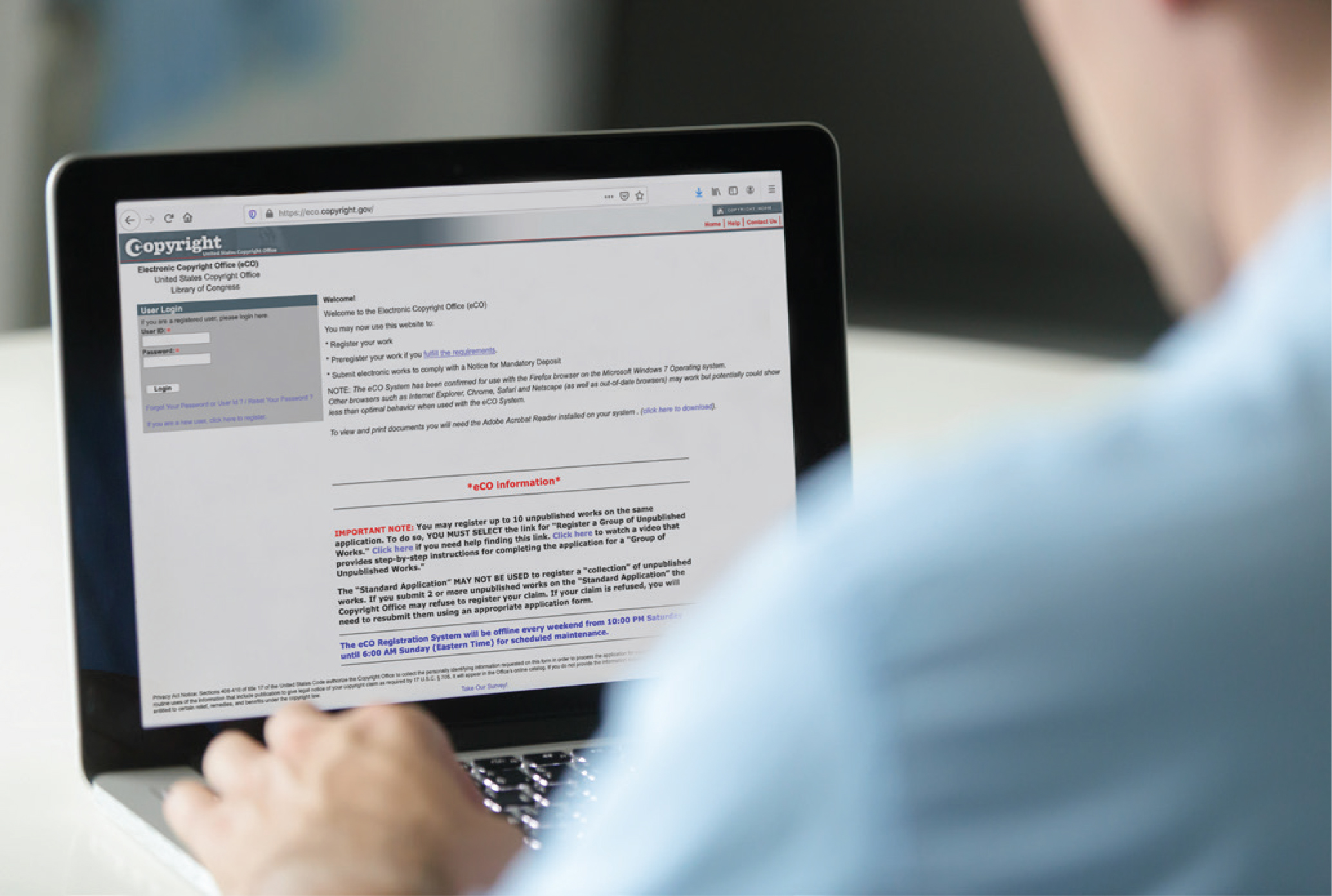
Computer program copyright registration is the process by which an author, copyright owner, or authorized representative files an application to register copyright for software, an application, a system, or a computer program with the competent authority. If the application meets legal requirements, the copyright owner may be granted a Copyright Registration Certificate.
In practice, a computer program may include enterprise management software, mobile applications, ERP systems, CRM systems, accounting software, sales software, SaaS platforms, websites with independent processing systems, internal tools, or specialized software developed by a business.
Computer program copyright registration is different from trademark registration, domain name registration, or patent registration. Copyright mainly protects the creative expression of the computer program, while a trademark protects signs used to distinguish goods or services. Businesses may refer to Trần & Trần’s article on copyright and trademark differences to avoid choosing the wrong form of protection.
Are computer programs protected by copyright in Vietnam?
Yes. Under the Vietnam Intellectual Property Law, a computer program is understood as a set of instructions expressed in the form of commands, codes, diagrams, or any other form, which, when attached to a medium readable by a computer, enables the computer to perform a task or achieve a specific result. A computer program is protected as a literary work, whether expressed in source code or object code. See the Vietnam Intellectual Property Law.
In other words, software, apps, or computer systems may be considered for copyright protection if they have been created and expressed in a specific form. Registration does not create the right from the beginning, but it helps the owner obtain clearer evidence of ownership when working with partners, investors, customers, or when handling disputes.
For technology companies, this is an important basis for managing intellectual property assets. A software product may take months or years to develop, but if the business does not have clear evidence of ownership, it may face difficulties when the software is copied, when seeking investment, or when transferring the software to a third party.
Businesses that want to learn more about copyright protection mechanisms may refer to Trần & Trần’s copyright services in Vietnam.
Why should businesses register copyright for computer programs?
Computer program copyright registration is not only about obtaining a certificate. For software businesses, a Copyright Registration Certificate can become an important document in business operations, cooperation, and rights enforcement.
Businesses should consider early registration for the following reasons:
- Evidence of ownership: The certificate records information about the work, author, and copyright owner.
- Better position when working with partners: When signing distribution, licensing, transfer, or development cooperation agreements, copyright documents help increase credibility.
- Support for fundraising and IP valuation: For technology startups, software may be a core asset when working with investors.
- Reduced internal dispute risk: Registration helps clarify the relationship between the company, employees, freelancers, outsourcing vendors, and co-authors.
- Support for infringement handling: When software is copied or used without authorization, the certificate is an important document for proving ownership.
- More professional commercialization: Businesses may use IP documents in bidding, sales, contract negotiation, or due diligence processes.
According to the consulting experience of Trần & Trần, many software disputes do not begin because the product lacks value. They often begin because the business has not clearly determined who the author is, who the copyright owner is, and whether rights to the source code have been fully transferred.
Who has the right to register copyright for a computer program?
The person or entity entitled to file computer program copyright registration may be the author, the copyright owner, or a duly authorized representative. However, with software, identifying the correct right holder is often more complex than with ordinary works because the development process may involve multiple parties.
The table below summarizes common situations:
| Software creation situation | Issues to review |
| An individual independently develops the software | The individual developer may be both the author and owner if there is no contrary agreement |
| Employees develop software under company assignments | Review employment contracts, assignment decisions, internal rules, and handover documents |
| A business hires a freelancer to develop software | Review the service contract, rights transfer clauses, and acceptance minutes |
| A business hires an outsourcing company to develop software | Review the software development agreement, source code handover scope, and ownership clauses |
| Multiple people jointly develop the software | Identify co-authors, co-owners, or agreements on rights allocation |
| An owner receives rights by transfer | There must be a contract or document proving the transfer of rights |
A common mistake is assuming that “paying a developer means the company automatically owns all software copyright.” This can be risky if the contract does not clearly regulate copyright transfer, economic rights, source code use rights, exploitation scope, and handover obligations.
Therefore, before filing an application, businesses should review employment contracts, software development contracts, outsourcing agreements, acceptance minutes, source code handover documents, and confidentiality agreements. If the legal documents are unclear, Trần & Trần can assist through its broader IP practice areas.
What documents are required for computer program copyright registration?
The application for computer program copyright registration must be prepared according to the correct type of work and the legal background of the software. Depending on each case, additional documents may be required to prove ownership, filing rights, or transfer of rights.
In general, businesses should pay attention to the following document groups:
- Copyright registration declaration: Records information about the work, author, owner, completion date, publication status, and applicant’s commitments.
- Copy of the computer program: May include materials showing the program in an appropriate form, depending on filing requirements and the actual condition of the software.
- Program description document: Describes the functions, purpose of use, main structure, operation, and key characteristics of the software.
- Legal documents of the author: Citizen ID, passport, or equivalent legal document.
- Legal documents of the owner: Enterprise registration certificate or legal documents of the individual or organization.
- Documents proving the right to file: Employment contract, assignment decision, software development contract, transfer agreement, acceptance minutes, or similar documents.
- Power of attorney: Required if the application is filed through a representative or authorized person.
- Consent of co-authors or co-owners: Required if there are multiple authors or multiple owners involved.
For computer programs, businesses must balance the requirement to submit materials showing the work and the need to protect source code confidentiality. The application should not be too superficial, but sensitive technical information should not be disclosed unnecessarily without proper review.
Under Decree No. 17/2023/ND-CP, copyright registration applications, copies of works, and related documents are further guided in the regulations on copyright and related rights. Businesses may refer to Decree No. 17/2023/ND-CP when preparing the application.
Readers may also review Trần & Trần’s guidance on copyright registration service and copyright registration procedure for works.

Procedure for computer program copyright registration
The computer program copyright registration procedure usually involves several steps. Proper preparation from the beginning helps reduce the risk of amendments, supplementation, or explanation requests regarding ownership.
Step 1: Review the software and identify the correct type of work
First, the applicant should determine whether the subject matter is properly classified as a computer program. A technology product may include source code, user interface, database, user manual, logo, software name, demo video, or graphic content.
Not all of these elements are registered under the same category. For example, source code may relate to a computer program, a logo may relate to a trademark, and a user manual may be a separate written work. Correct classification helps ensure consistency and avoids confusion between protection mechanisms.
Step 2: Identify the author and copyright owner
After identifying the subject matter, the business should determine who the author is, who the copyright owner is, and what documents prove the owner’s rights.
This step is especially important for software developed by employees, freelancers, or outsourcing vendors. If the contract is unclear about rights transfer, the business should address this issue before filing the application to avoid later disputes.
Step 3: Prepare the application and technical documents
The business should prepare the declaration, legal documents, copy of the computer program, description document, power of attorney, and documents proving the filing right. The software name, author name, owner name, completion date, and information across all documents should be consistent.
A strong application is not only complete in terms of paperwork. It should also clearly show what the software is, how it was created, who has rights over it, and why the applicant is entitled to register it.
Step 4: File the application with the competent authority
The copyright registration application is filed with the competent authority under Vietnamese law. Depending on the applicable filing method, the application may be filed directly, by post, or through another accepted method.
When filing, the applicant should keep the receipt, application number, tracking information, and copies of all submitted documents. These records are important if amendment or supplementation is requested.
Step 5: Monitor the application and receive the certificate
After filing, the application will be examined. If there is a request for amendment, supplementation, or explanation, the applicant must respond accurately and within the required timeline. If the application meets the requirements, the owner may receive a Copyright Registration Certificate for the computer program.
This certificate may be used when working with partners, investors, customers, dispute resolution authorities, or during software transfer and licensing activities.
What information appears on a Copyright Registration Certificate for a computer program?
A Copyright Registration Certificate for a computer program records information about the work, author, and copyright owner. It is one of the important documents that helps a business prove rights over its software.
The certificate may generally include:
- Title of the work: The name of the software, app, system, or computer program being registered.
- Type of work: Usually stated as computer program.
- Author: The individual or individuals who directly created the program.
- Copyright owner: The individual or organization holding economic rights over the program.
- Certificate number: The identification number of the certificate.
- Date of issuance: The date the competent authority issues the certificate.
- Issuing authority: The authority that records the copyright registration.
According to the Trần & Trần IP Team, when using a Copyright Registration Certificate image for communication or marketing purposes, businesses should hide sensitive information such as certificate number, address, enterprise code, personal identification number, signature, or internal data if public disclosure has not been approved. The part showing the type of work as computer program may be kept if it is suitable for illustration.
Using an actual certificate image, if properly handled, can increase the credibility of an article or company profile. However, a certificate for one case reflects only the information of that specific file and should not be used to predict the result of all other cases.

Does computer program copyright registration protect software ideas?
Computer program copyright registration does not mean that all software ideas are protected. Copyright mainly protects the creative expression of the program. It does not automatically protect business ideas, general functions, operating processes, or algorithms at the abstract idea level.
For example, the idea of building “sales management software,” “a medical appointment booking app,” “an online learning platform,” or “a CRM system for enterprises” is a broad idea or functional model. Copyright does not grant exclusive rights over the entire idea. However, source code, specific structural expression, description documents, interface elements, and fixed creative elements may be considered for protection depending on the case.
Technology businesses should understand this point clearly when building an IP protection strategy. In many cases, copyright should be combined with trademarks, confidentiality agreements, rights transfer agreements, source code governance, and internal control measures. For software with a commercial brand identity, businesses should also consider trademark services in Vietnam to protect the software name, logo, or brand.
Common mistakes when registering software copyright
Many computer program copyright registration applications face difficulties not because the software lacks value, but because the business has not prepared sufficient legal and technical documents. Below are common mistakes.
Confusing the author with the copyright owner
The author is the person who directly creates the computer program. The owner is the individual or organization holding economic rights over the work. In many cases, the developer is the author, but the company may be the owner if there is a valid legal basis. Confusing these roles may make the application inaccurate from the beginning.
Lacking documents proving the company’s ownership
If the software is developed by employees, freelancers, or outsourcing vendors, the company needs documents proving ownership. Having the software product alone may not be enough if there is no contract, assignment decision, acceptance minutes, or rights transfer clause.
Inconsistent software names
A software product may have an internal name, commercial name, version name, and display name in the interface. If these names are inconsistent in the declaration, description, contract, and handover documents, the application may require explanation or adjustment.

Overly brief program description
The description document should help readers understand what the software does, how it operates, what its main structure is, and how it is used. A description that is too short, too general, or only includes a few introductory lines may weaken the application.
Failing to consider source code confidentiality
Source code is an important asset of a software business. When preparing the application, the business must both satisfy the requirement to show the work and consider how to protect technical information, internal data, and trade secrets.
Publishing the certificate without hiding sensitive information
Using a certificate image in an article, company profile, or marketing material can increase credibility. However, businesses should carefully review which information should be hidden before public posting.
Ignoring online infringement risks
Software, source code, user interfaces, and technical documents may be copied or used without authorization on the internet. If a business faces this situation, it may refer to Trần & Trần’s article on copyright infringement on the internet to understand initial handling options.
Computer program copyright registration service at Trần & Trần
Due to the specific nature of software, computer program copyright registration is not simply about completing a declaration form. Businesses must identify the correct type of work, author, owner, rights transfer basis, and appropriate technical documents.
Trần & Trần can assist clients with:
- Reviewing the software and identifying the appropriate type of work;
- Advising on authors, co-authors, and copyright owners;
- Reviewing employment contracts, software development contracts, outsourcing agreements, and handover documents;
- Advising on preparation of the computer program copy and description document;
- Drafting the declaration, power of attorney, and related application documents;
- Representing clients in filing the copyright registration application;
- Monitoring the application and responding to amendment or supplementation requests if any;
- Advising on licensing, transfer, commercialization, and software infringement handling.
If your business is preparing to register copyright for software, an app, a SaaS platform, or an internal system, contact Trần & Trần for a file review before filing. Proper preparation from the beginning helps reduce amendment risks and gives the business a clearer legal basis for exploiting its technology assets.
Contact Trần & Trần at 0917 913 266 or [email protected]. Our office is located at P802, Talico Building, No. 22 Ho Giam Street, Quoc Tu Giam Ward, Dong Da District, Hanoi.
FAQ about computer program copyright registration
What is computer program copyright registration?
Computer program copyright registration is the procedure for recording copyright over software, apps, systems, or programs expressed in source code, object code, and related technical documents.
Are computer programs protected by copyright in Vietnam?
Yes. Computer programs are protected by copyright and are protected as literary works, whether expressed in source code or object code.
Is software copyright registration mandatory?
Copyright may arise when a work is created and expressed in a certain form. However, registration helps the owner obtain more convenient evidence of rights when exploiting, transferring, or handling disputes.
What documents are required for computer program copyright registration?
The application usually includes a copyright registration declaration, copy of the computer program, program description document, legal documents of the author and owner, documents proving the right to file, power of attorney, and other documents depending on the case.
Is source code required for computer program copyright registration?
The application for a computer program requires materials showing the program under applicable regulations. The preparation of source code, object code, interface materials, and description documents should be reviewed case by case to meet legal requirements while protecting technical confidentiality.
Who owns copyright in software?
The owner may be the individual developer, the company assigning the creative task, the party hiring the developer, or the party receiving transferred rights, depending on the documents, contracts, and context in which the software was created.
Can an app, website, or SaaS platform be registered as a computer program?
It may be possible if the app, website, or SaaS platform includes a computer program expressed in an appropriate form. The software structure, source code, interface, technical documents, and ownership status should be reviewed before filing.
What is the value of a Copyright Registration Certificate for a computer program?
The certificate records information about the work, author, and copyright owner. It supports proof of ownership when exploiting, transferring, licensing, or handling disputes.
Does computer program copyright registration protect the software name?
Not fully. Copyright protects the expression of the computer program, while the software name may need to be considered from a trademark perspective if it is used to distinguish products or services in the market.
Does Trần & Trần assist with computer program copyright registration?
Yes. Trần & Trần assists with file review, identification of authors and owners, document preparation, application filing, application monitoring, and advice on protection, transfer, licensing, and software infringement handling.
Conclusion
Computer program copyright registration is an important step that helps businesses, startups, and individual developers obtain a stronger legal basis for proving rights over software, apps, SaaS platforms, or technology systems they have created, invested in, or acquired.
To make the application process more efficient, businesses should carefully prepare from the beginning, including identifying the author, owner, transfer basis, description document, and copy of the computer program. For commercially valuable software or software developed by multiple parties, file review before filing is particularly important.
Trần & Trần can accompany businesses in registering, exploiting, and protecting copyright over computer programs, helping technology assets be managed more securely and reducing legal risks in business operations.