PCT national phase entry is a critical milestone for anyone seeking international patent protection. This step determines whether a patent application actually moves forward in a specific country. Many applicants underestimate this stage and lose rights as a result. This guide explains what PCT national phase entry means, how it works, and what to prepare.
1. What Is PCT National Phase Entry?
PCT national phase entry is the process of bringing an international patent application into a specific country’s legal system. The applicant must complete this step before any national patent office can examine the application. Without it, the application will not be reviewed or granted locally. This makes national phase entry the true gateway to enforceable patent rights.
The Patent Cooperation Treaty does not create a single global patent. Instead, it allows applicants to file one international application covering many countries at once. This system simplifies the early filing process significantly. However, actual protection only exists once the applicant enters the national phase in each chosen country.
If an applicant misses the national phase deadline, the application is treated as withdrawn in that country. This means the applicant permanently loses the right to seek protection there. There is usually no simple way to reverse this outcome. Understanding the timeline early is therefore essential for every applicant.
2. Overview of the PCT Process
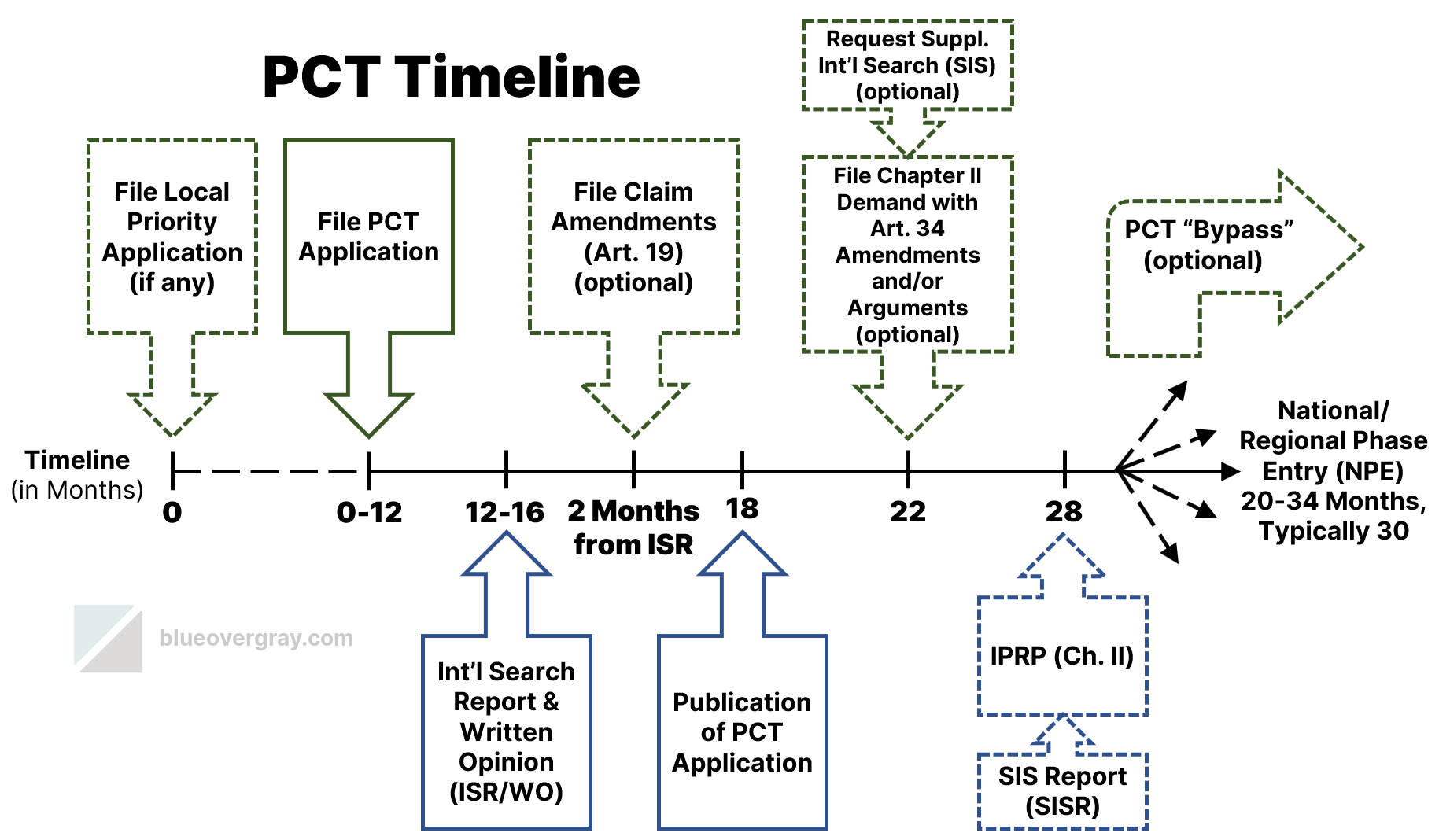
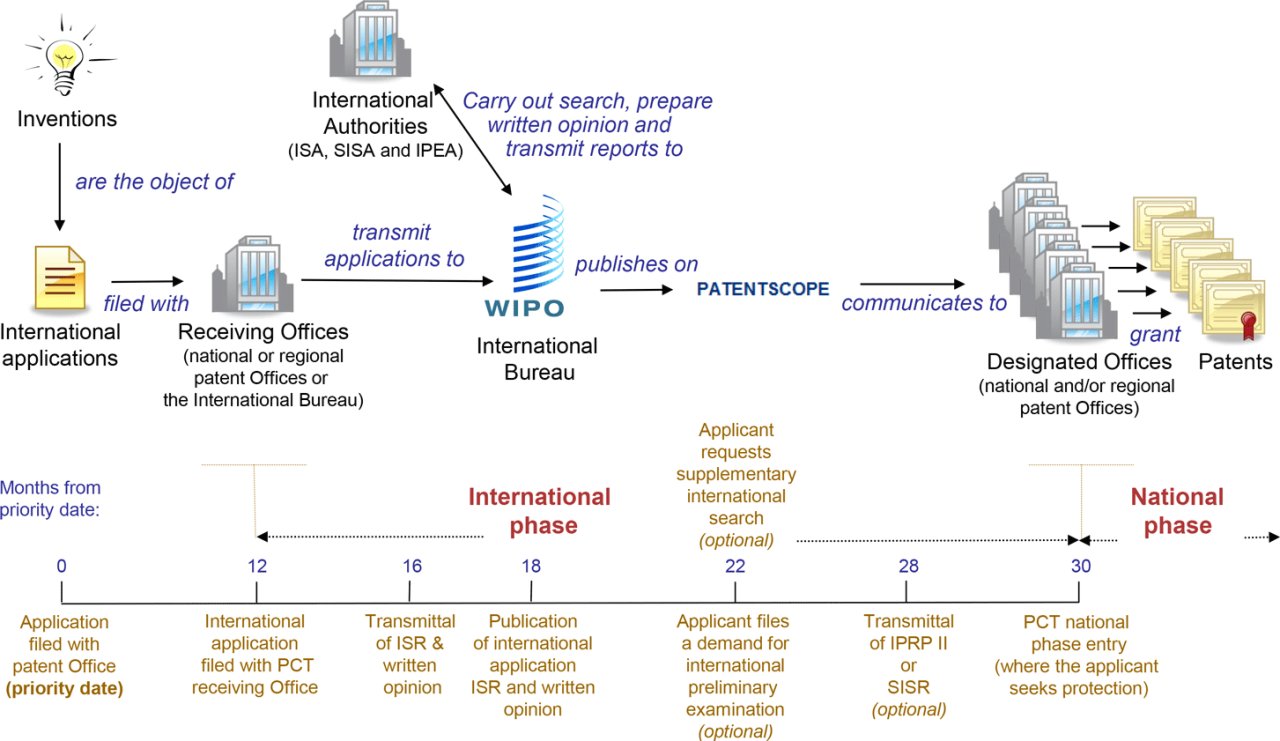
The PCT process begins with filing a single international application. This filing can be done through a national receiving office or directly with WIPO. From that point, the application enters what is known as the international phase. This phase includes search, publication, and optional preliminary examination.
An International Searching Authority reviews the application and issues a search report. This report identifies existing technology that may affect the invention’s novelty. It also includes a written opinion on patentability. Applicants often use this feedback to refine their claims before moving forward.
Around eighteen months after the priority date, the application is published. This publication makes the invention’s content publicly available. Competitors and researchers can then review the disclosed technology. Despite this exposure, the applicant still retains the right to pursue protection later.
Applicants may also request an optional international preliminary examination. This step, sometimes called Chapter II, provides more detailed feedback. It helps applicants assess the likelihood of success in specific markets. Many applicants use this stage to strengthen claims before entering costly national procedures.
The final and most decisive stage is national phase entry. At this point, the applicant must act separately in each target country. Working with experienced professionals is often recommended here. Firms familiar with legal practice in Vietnam can help applicants navigate country-specific requirements correctly.
3. Understanding the National Phase Deadline
The most important number in this entire process is the deadline. Most PCT member states require national phase entry within thirty months of the priority date. Some countries extend this to thirty-one months instead. This single-month difference can matter greatly for applicants managing multiple filings.
The priority date is not the same as the international filing date. It refers to the date of the very first patent application the applicant relied on. If no earlier application exists, the PCT filing date becomes the priority date. Confusing these two dates is one of the most common and costly mistakes.
Each PCT member country sets its own deadline within treaty limits. Applicants should never assume a single deadline applies everywhere. Instead, they must verify the specific rule for every target country. WIPO’s official database, along with local counsel, can confirm these details accurately.
Some countries allow late entry with an additional surcharge fee. Others may permit restoration of rights under limited and specific circumstances. However, these exceptions are not guaranteed and often involve extra cost. The safest strategy remains timely, proactive filing in every intended market.
4. Required Documents for National Phase Entry
Documentation requirements vary by country, but several elements are almost always required. First, applicants typically need a translation of the international application. This translation must match the official language of the target country. Poor translations can unintentionally narrow the scope of protection.
Second, applicants must submit a national phase entry request form. This form is usually provided by the local patent office. It formally notifies authorities that the applicant wishes to continue the process. Missing or incomplete forms can delay examination significantly.
Third, most countries require the applicant to appoint a local representative. This requirement applies especially to foreign applicants without a local address. A qualified representative ensures compliance with domestic procedural rules. Applicants exploring patent protection in Vietnam will often need this kind of local representation.
Finally, applicants must pay all applicable national fees. These may include filing fees, examination fees, and publication fees. Some jurisdictions also require a power of attorney document. Preparing all of these elements early reduces the risk of last-minute errors.
Why Translation Quality Matters
Translation is one of the highest-risk elements of national phase entry. A single mistranslated term can change the meaning of a patent claim. This can unintentionally reduce the scope of protection granted. In some cases, poor translation can even lead to outright rejection.
For this reason, applicants should use translators with technical and legal expertise. General translation services are rarely sufficient for patent documents. Specialized firms understand both scientific terminology and legal phrasing. This combination is essential for preserving the original intent of the claims.
5. Estimated Costs of National Phase Entry
The cost of national phase entry depends on several variables. These include the number of target countries and the complexity of the application. Translation costs often represent the largest single expense. Longer or more technical applications naturally increase this cost.
National filing fees vary widely between jurisdictions. Some countries charge modest fees, while others are considerably more expensive. Representation fees for local patent agents add another layer of cost. Examination fees may also apply separately from filing fees.
Because costs can escalate quickly, many companies adopt a market-filtering strategy. Instead of entering every possible country, they focus on markets with real commercial value. This approach balances protection with financial discipline. It also allows resources to be concentrated where they matter most.
Ongoing costs continue even after a patent is granted. Most countries require annual maintenance or annuity fees. These fees typically increase as the patent term progresses. Applicants should budget for these long-term costs, not just the initial filing.
6. National Phase Entry Across Key Markets
Vietnam
Vietnam is a PCT member state with a national phase deadline of thirty-one months. Foreign applicants must appoint a licensed local representative. This requirement applies to nearly all foreign-origin applications. Businesses may also consider protecting industrial designs in Vietnam alongside their patent filings.
Combining multiple intellectual property rights often strengthens a company’s overall position. A patent protects the underlying invention, while a design registration protects its visual appearance. Together, these rights create a more complete protection strategy. This is especially valuable for consumer products with distinctive designs.
Laos
Laos also participates in the PCT system, following similar procedural principles. Applicants should review requirements for patents and petty patents in Laos before filing. Petty patents can offer faster protection for incremental innovations. This option may suit applicants with shorter development cycles.
Local representation remains essential in Laos, as in most member states. Applicants unfamiliar with local procedures risk delays or rejected filings. Working with experienced regional counsel helps avoid these pitfalls. Early engagement with local experts often saves both time and cost.
Cambodia
Cambodia’s patent system also follows PCT principles for national phase entry. Applicants should examine rules for inventions and utility models in Cambodia carefully. Utility models can provide an alternative path for less complex innovations. This flexibility is useful for companies expanding into emerging markets.
As with other jurisdictions, deadlines and documentation requirements must be verified locally. Cambodia’s patent office may request specific supporting materials. Missing these requirements can slow down the examination process. Proper preparation remains the best way to avoid unnecessary delays.
Myanmar
Myanmar represents another important market for regional expansion. Applicants should consult resources on patent protection in Myanmar before entering the national phase. Myanmar’s patent system has evolved significantly in recent years. Staying updated on current procedures is therefore particularly important here.
Given the evolving regulatory environment, professional guidance is highly valuable in Myanmar. Local representatives can clarify current filing requirements accurately. This reduces the risk of relying on outdated information. Applicants should confirm requirements close to their actual filing date.
7. Common Mistakes During National Phase Entry
Mistake One: Confusing the Priority Date
This is perhaps the most frequent and damaging error. Applicants sometimes calculate deadlines from the wrong starting date. This mistake can silently cause a missed deadline. Careful date verification should happen at the very start of the process.
Mistake Two: Applying a Single Deadline to All Countries
Some applicants assume every country shares the same thirty-month deadline. In reality, deadlines vary between thirty and thirty-one months. A few countries also apply unique local variations. Treating all deadlines as identical creates unnecessary risk.
Mistake Three: Delaying Translation Work
Translation often takes longer than applicants expect. Waiting until the last few weeks before a deadline is risky. Rushed translations are more likely to contain errors. Early planning allows time for careful review and correction.
Mistake Four: Ignoring the International Search Report
The search report and written opinion contain valuable insights. These documents indicate the likely strength of a patent claim. Ignoring this feedback can lead to weaker national filings. Applicants should use this information to refine claims before entry.
Mistake Five: Choosing Representation Without Due Diligence
Selecting a representative without research can be costly. Applicants should review a firm’s experience and regional expertise. Learning more about the company’s background and team can help build confidence. A well-informed choice reduces the risk of procedural mistakes later.
8. Strategic Tips for a Successful National Phase Entry
Build a Deadline Tracking System
Applicants should maintain a clear deadline tracker for every target country. This tracker should include priority dates and country-specific deadlines. Relying solely on notifications from patent offices is risky. A proactive system prevents accidental missed deadlines.
Prioritize High-Value Markets
Not every country deserves equal investment. Applicants should evaluate commercial potential before committing resources. Markets with strong demand or manufacturing relevance often deserve priority. This targeted approach improves the return on filing investment.
Start Translations Early
Translations should begin well before the deadline approaches. A buffer of two to three months is generally advisable. This allows time for expert review and correction. Early preparation significantly reduces last-minute pressure.
Work With Experienced Local Counsel
Regional expertise makes a significant difference in outcomes. Local representatives understand nuances that general counsel may miss. This is especially true across Vietnam, Laos, Cambodia, and Myanmar. Applicants can also review guidance directly from WIPO’s official PCT resources to confirm treaty-level rules.
Communicate Directly When Needed
Sometimes applicants require personalized guidance for complex cases. In these situations, reaching out to professionals directly is valuable. Applicants can contact experienced IP counsel to discuss specific filing strategies. Direct communication often clarifies country-specific nuances faster than general research alone.
9. A Simplified Example Timeline
Consider an applicant who files a PCT application on day one. The international search report typically arrives within a few months. Publication follows around the eighteen-month mark. This gives the applicant significant time to evaluate market interest.
By month twenty-two or twenty-three, translation work should already be underway. This timing allows adequate review before the final deadline. By month twenty-eight, most documentation should be finalized. This leaves a safety buffer before the thirty or thirty-one month cutoff.
Applicants who follow this kind of timeline reduce unnecessary stress. They also minimize the risk of rushed or incomplete filings. A structured approach transforms a complex process into manageable steps. This discipline often separates successful applicants from those who lose rights unnecessarily.
10. Frequently Asked Questions
Is national phase entry mandatory for every PCT application? No, it is not mandatory if protection is no longer desired in a country. However, it becomes mandatory if the applicant wants to pursue a patent there.
Can missed deadlines ever be recovered? Some countries allow restoration of rights under specific conditions. This process is not guaranteed and often requires strong justification.
Can applicants choose different countries for entry? Yes, this flexibility is one of the PCT system’s main advantages. Applicants can evaluate market potential before committing to specific countries.
What happens after national phase entry is complete? The application proceeds through examination under local patent law. This may include office actions, responses, and eventual grant or refusal.
Do all countries require a local representative? Most countries require this for foreign applicants. Some exceptions exist, but verifying local rules remains essential.
How long does examination take after national phase entry? Timelines vary widely by country and workload. Some jurisdictions issue results within a year, while others take much longer.
Can claims be amended during national phase entry? Yes, most countries allow claim amendments at this stage. This flexibility lets applicants respond to earlier search results or opinions.
11. PCT Route vs. Direct National Filing
Applicants sometimes wonder whether the PCT route is truly necessary. An alternative option is filing directly in each country from the start. Direct filing skips the international phase entirely. However, it removes the flexibility that PCT applicants typically enjoy.
With direct filing, applicants must decide on target countries almost immediately. There is no extended window to assess market interest. This can force premature decisions about where to invest resources. Many businesses find this approach less efficient for global strategies.
The PCT route delays major national costs by up to thirty months. This extra time allows for market research and investor discussions. It also allows applicants to review search results before committing further. For most multi-country strategies, this delay offers real practical value.
That said, direct filing can sometimes suit very narrow, single-market strategies. If only one country matters, the PCT system may add unnecessary complexity. Applicants should weigh their specific business goals carefully. Professional guidance can help determine the most efficient filing path.
12. The Role of the Written Opinion in National Phase Strategy
The written opinion issued during the international phase deserves special attention. It offers an early, informal assessment of patentability. Applicants can use this feedback to adjust their claims strategically. This is far cheaper than reacting to rejections after national phase entry.
If the written opinion raises concerns, applicants have options. They can amend claims before entering the national phase. They can also submit arguments during the optional preliminary examination. Addressing issues early often improves outcomes across multiple countries simultaneously.
Ignoring a negative written opinion rarely leads to a good result. National examiners frequently rely on similar reasoning during local review. Proactively addressing concerns increases the chance of smoother examination. This step is especially valuable when entering multiple markets at once.
13. Coordinating Patent Strategy With Broader IP Protection
Patents rarely exist in isolation from other intellectual property rights. Trademarks, industrial designs, and trade secrets often work together. A strong IP strategy considers all of these elements simultaneously. This holistic approach maximizes long-term commercial value.
For companies expanding across Southeast Asia, regional consistency matters greatly. Filing strategies should align across Vietnam, Laos, Cambodia, and Myanmar where relevant. Working with a single experienced firm across these markets can improve consistency. It also simplifies communication and reduces administrative complexity.
Businesses should also consider timing between different IP filings. Coordinating patent and design applications can create stronger combined protection. This is particularly relevant for physical products with distinctive appearances. Strategic timing can prevent gaps in protection during market launch.
14. Post-Grant Obligations After National Phase Entry
Successfully entering the national phase is not the final step. After examination, a granted patent still requires ongoing maintenance. Most countries require annual or periodic renewal fees. Missing these payments can cause the patent to lapse prematurely.
Applicants should also monitor the market for potential infringement. A granted patent provides legal tools, but enforcement requires active monitoring. Working with local counsel helps identify infringement risks early. Prompt action often leads to better enforcement outcomes.
Renewal schedules vary significantly between countries. Some jurisdictions require payments early in the patent term. Others may allow longer initial grace periods. Applicants should build these obligations into their long-term budgeting plans.
15. Conclusion
PCT national phase entry represents the true turning point for international patent protection. Missing this step, or handling it incorrectly, can undo months of earlier work. Understanding deadlines, documentation, and country-specific rules is therefore essential. Markets like Vietnam, Laos, Cambodia, and Myanmar each carry unique procedural nuances.
Applicants who plan early and work with experienced professionals face fewer risks. Translation quality, timely filing, and proper representation all play critical roles. A clear strategy helps applicants protect valuable innovations across multiple markets. With careful preparation, national phase entry becomes a manageable and successful process.
This article provides general information only and does not constitute legal advice. Patent regulations vary by country and may change over time. Applicants should consult WIPO or a qualified intellectual property attorney for guidance specific to their situation.